Happy 125th Birthday to the Tuxedo Park Fire Department ( Posted 5/23/26)
This year is the 125th Anniversary of the Tuxedo Park Fire Department.
To celebrate our proud history and to help spread the news that we are always looking for more new recruits to our volunteer service, we will be opening an exhibition at the Tuxedo Historical Society on Sunday, June 14, from 11:30 AM to 4:00 PM. This exhibition will run through September. You will see many historical photos and artifacts that connect the Fire Department to legendary Tuxedo residents, including Richmond Talbot, who served as the Department’s President for 31 consecutive years until he died, Pierre Lorillard V, son of the Founder of Tuxedo Park, Supervisor Charles Patterson, and Frederic Tams, who was President of the Union Club. You will see many Town of Tuxedo families who for generations have been the backbone of this volunteer service. You will see a video and photos of fire and accident scenes our members have to deal with. You will see how the original Tuxedo Park Fire Department is now Co. 1 of the Tuxedo Joint Fire District, which includes Sterling Forest Volunteer Fire Department, Co. 2 and Eagle Valley Volunteer Fire Department, Co. 3, serving Tuxedo Park, Town of Tuxedo, 13 miles on the New York Thruway, providing mutual aid to neighboring towns and supporting New York State efforts to fight major forest fires.
The event will be interactive: you will be able to handle firefighting equipment, see the huge variety of tools compactly packed into a truck, try on protective bunker gear, and see how a car is cut up by the “jaws of life” to save a stranded passenger within. It will be a festive event too: we are offering hot dogs, chili (prepared by our firefighters who are excellent cooks) and soft drinks. Students from the Tuxedo Park School and George Grant Mason have already sent in their creative congratulatory notes, and we will be displaying them right at the entrance.
The Tuxedo Park Fire Department has published a book to commemorate our storied history. This 100-page illustrated book – TPFD125 – tells the intertwininghistory of our volunteer service with the founding history of Tuxedo Park and the Town of Tuxedo, highlighting the people who have made significant contributions, including Pierre Lorillard V, son of the founder of Tuxedo Park, and other prominent residents in our community. It describes the notorious fires that have left indelible memories and some haunting ruins that still stand today. It also provides insight into our training, governance, traditions and culture as well as our state-of-the-art equipment and trucks.
We hope that residents will enjoy this book and add it to their personal library of publications on Tuxedo Park. Should anyone wish to purchase a copy for themselves or as a gift for friends and family, please just let Gardiner Hempel (President/TPFD) know at ghempeljr@gmail.com or 845-729-2343.
**IMPORTANT: TPfYi is experiencing some technical dificulty. Clicking on the first paragraph below will route to the Village News page. To route to the reference6/30/25 meeting of the BOE click HERE
The reason for the meeting was to enter into and executive session “for or the purpose of: e) collective negotiations pursuant to article fourteen of the civil service law; f) the medical, financial, credit or employment history of a particular person or corporation, or matters leading to the appointment, employment, promotion, demotion, discipline, suspension, dismissal or removal of a particular person or corporation” (The meeting agenda can be found here)
When they emerged from executive session, the BOE voted unanimously in favor of adding an item to the agenda authorizing the Board President to sign a contract with employee 63025.
Before voting, the Board president stated the following “The motion that we are reading and the contract involves the recruitment of an employee who has a current position in another district which is why we’re not using the name but it will become obvious and evident in the near future. This (the motion) authorizes the Board President and the Board coming up to act on this.”
The Board then voted 5-0 in favor of approving the motion. (Two board members were not present for the vote.)
After several months went by with no further discussion or reference to the contract, TPFYI FOILED the document and discovered that it was an employment agreement for the position of District Superintendent in the amount of $285,000.
The contract can be viewed in its’ entirety here. It has been signed by one party, but not the other.
Why was the Board of Education looking to contract with a new Superintendent without any public discourse or involvement?
What about the current Superintendent?
Did they interview multiple candidates?
Why did they feel the need to lock in a contract before the Board turned over on July 1?
How were they planning to afford the increase in salary under a contingency budget? How did they arrive at the salary amount? Is an annual salary of $285,000 reasonable with K-12 enrollment totaling 171 students?
What bearing, if any, does an unexecuted contract for a quarter of a million dollars have on the TUFSD taxpayer? Why is all of this important?
One word: Transparency
Transparency is critical for Boards of Education because they make decisions that affect students, families, staff, and taxpayers. It helps to ensure that a Board of Education serves the community fairly, responsibly, and effectively. Open meetings, public records, and clear communication help ensure board members act responsibly and ethically.
If a Board of Education conceals their plans to search for or negotiate with a new superintendent while the current superintendent is still employed, community members may view that as a transparency/governance concern for several key reasons:
Public trust is damaged — Superintendent leadership directly affects schools, staff, budgets, and students. When major leadership discussions happen without clear communication, people feel excluded or misled.
It raises accountability questions — Taxpayers expect the BOE to explain why a leadership change is being considered, especially if the current superintendent has not publicly resigned or been evaluated openly.
It creates instability — Staff, parents, and students become uncertain about district direction when leadership decisions appear sudden or secretive.
Community engagement is reduced — Stakeholders lose the opportunity to provide input on the district’s leadership priorities and search process.
While the Board may argue that early superintendent discussions are kept confidential to protect personnel privacy, avoid disruption, or conduct negotiations appropriately, the key issue is whether the they effectively balanced the necessary confidentiality with their obligation to keep the public informed once decisions became serious or actionable. Communities generally understand that some matters — especially sensitive personnel issues — may require confidentiality at certain stages. However, residents still expect openness about the direction of the district, the reasoning behind major decisions, and the process by which decisions are made.
It is critical that a community can trust its Board of Education because students are directly affected and because they are managing 15 million dollars of taxpayer money. Public cooperation depends on confidence and school stability relies on credibility. When trust is strong, communities and schools can work together productively. When trust breaks down, communication, collaboration, and confidence in district leadership tend to suffer.
Progress Report: What's Going On With The Old Junction Property? (Posted 2.3.26)
When the Town of Tuxedo first purchased the property at 209 Route 17 (otherwise known as the old Junction), their intent was to tear down the structure and turn it into a municipal parking lot. A lack of public parking has long served as one of the biggest obstacles to economic growth in downtown Tuxedo and the Board was hopeful that the lot would help to alleviate that issue by promoting both business growth and pedestrian connectivity. After a thorough review of the property however, it was determined that the structure was in sound shape and, despite fears and rumors to the contrary, that it could likely be sold and utilized as an anchor property for commercial development in Town.
The current Board believes that the Town must adopt a proactive approach towards stimulating economic growth in the Hamlet or they risk the loss of potential retail and hospitality opportunities to either the adjoining municipalities or the soon-to-be-built commercial district in Tuxedo Reserve. While the influx of new residents from the development should help to stimulate some economic activity in the Hamlet, it will not solve the infrastructure problems that currently exist there (lack of parking, absence of pedestrian walkways etc). To this end, the Town has been diligently working on a revitalization/economic development plan for the past two years, conducting frequent meetings and workshops aimed at informing the public while also gathering feedback and suggestions from the community. They have invested approximately 2 million dollars in funding received from the Related Companies (Tuxedo Reserve) into beatification efforts in the Hamlet and have submitted an application for grant monies totaling roughly 10 million dollars to be used for infrastructure repairs there. The Board considers the purchase of this particular property and subsequent sale of the building to be an important part of the overarching plan for business development. With this, they are actively investing in their own future, which is not an uncommon municipal practice.
The property was purchased in 2024 for $550,000 by way of a Bond Anticipation Note (BAN). The Town has three years to either repay the note or roll it into a bond. During that three-year period, they are required to pay interest only, which is 4.09%. In 2025, the cost to the Town was $28,000.
The Board reports having had a significant level of interest in the property. They are cognizant of wanting to bring in a business that will not only serve as an asset to the local community but will also draw visitors to the town of Tuxedo. At one point they had a buyer, but unfortunately that fell through. They are currently working with another local business who has expressed interest and are hopeful that this will work out. Details will be forthcoming publicly when and if appropriate. In the meantime, residents can rest assured that at this time, the purchase of the property has not had a negative fiscal impact on the Town and that the Town Board is working very hard to facilitate a viable, anchor business there for the benefit of the entire community.
Winter in Tuxedo - A Community Album (Posted 1/24/2026)
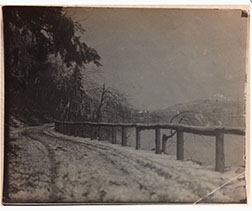
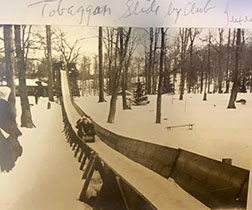
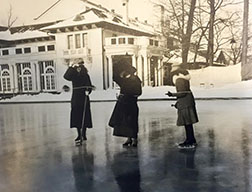
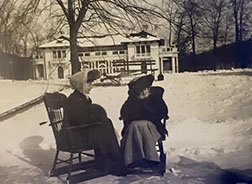
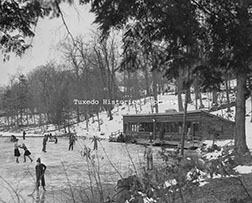
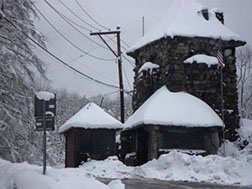
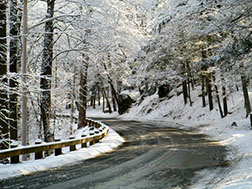
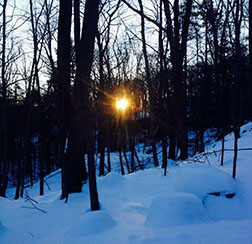
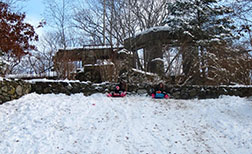
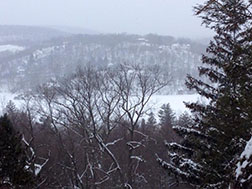
Tuxedo is a beautiful place in the winter! We've started an album showcasing pictures from wintwers past. We hope you will enjooy checking out photos of the old toboggan run at the Tuxedo Club, turn of the century ice skating, and the beautiful snowly landscapes! Help us grow and expand our album to include all areas of Town by submitting your winter pictures to us at tpfyi@optonline.net! Then check back here periodically throught the winter or follow us on Facebook to view the album as it grows!
The surrounding Districts of Chester, Monroe Woodbury and Suffern, all of which are significantly larger than the TUFSD, earned comparable results while Greenwood Lake, smaller in size and more like Tuxedo, outperformed them all with rates in mid and upper 70th percentile across all three areas.
The School Board and Administration have not yet publicly addressed the results or outlined any plans for remediation.
Videos of the School Board meetings can be found on the District’s YouTube page as well as the TPFYI website.
MEET THE CANDIDATES FOR TOWN BOARD 2025 (Posted 10.25.25)
Election Day is Tuesday, November 4. This year in Tuxedo, 4 candidates are vying for 3 open seats on the Town Board. In an effort to help residents get a better idea of who the candidates are, why they have chosen to run and what their priorities will be if elected, TPFYI presented each Candidate with the following questionnaire. Below please find their unedited responses in the order they were received.
Candidate:Adam Eirand Candidate for Tuxedo Town Council “Strength Through Collaboration”
Vocation:Chief of Police, Village of Greenwood Lake Police Department
Years of Residency in the Town:43 years — lifelong resident and third-generation member of Tuxedo
Government Experience: Appointed to the Tuxedo Town Board in February 2025. Currently serving as Councilman, actively involved in oversight of multiple community projects, including the Tuxedo Gas Station redevelopment, the Junction property renovation, ongoing planning and revitalization efforts within the Southfields district, and the Tuxedo Reserve project. I have also been working closely to strengthen communication and build a positive, collaborative relationship with the Tuxedo Union Free School District. My focus remains on improving efficiency, accountability, and communication across all departments to strengthen overall operations throughout Tuxedo. In addition to my service on the Town Board, I have devoted more than 15 years to law enforcement with the Village of Greenwood Lake Police Department, where I currently serve as Chief of Police. I began my career as a Patrolman in 2009 after graduating from the Rockland County Police Academy and advanced through the ranks; Youth Officer, Detective, Detective Sergeant, Lieutenant, and ultimately Chief in 2021. In each of these roles, I have led by example, emphasizing community engagement, officer professionalism, and public safety. My experience managing budgets, personnel, and inter-agency coordination has given me a strong understanding of government operations, accountability, and leadership under pressure.
Volunteer Work in the Town of Tuxedo:Former Board Member, Vice President, and President of the Tuxedo Union Free School District Board of Education. Tuxedo UFSD Extramural Basketball Coach, Assistant Modified Basketball Coach, CYO Recreation League Basketball Coach, Tuxedo UFSD Outreach Committee Member, and Secretary/Treasurer of the Wee Wah Fishing Club. Former Tuxedo Little League Coach and Executive Board Member.
Why are You running for Town Council? I am running for Town Council because I believe Tuxedo’s greatest strength lies in its people. As a lifelong resident, husband, father, and public servant, I am committed to ensuring Tuxedo remains a safe, financially stable, and thriving place for families and businesses. My goal is to bring hands-on leadership, accountability, and follow-through to every aspect of local government, building strong relationships with our residents, local organizations, and the Tuxedo Union Free School District to move our community forward together.
What attributes will You bring to the Town Government? I bring over 20 years of leadership experience, a strong financial background, and a deep understanding of how effective teamwork drives results. My approach emphasizes transparency, responsiveness, and collaboration. I take pride in seeing projects through to completion and ensuring every department—Police, DPW, and Town Hall—has the support, staffing, and tools they need to deliver high-quality service to our residents.
What are the three most important issues currently facing the Town?
1. Maintaining fiscal responsibility and driving revitalization — Ensuring taxpayer dollars are managed wisely while identifying ways to increase revenue and reduce long-term costs. A major part of that effort includes advancing the responsible revitalization of the Hamlet and Southfields districts while coordinating closely with Tuxedo Reserve to ensure all of our business districts are in harmony. Each area of Tuxedo should complement the others so that our entire community can thrive together—socially, economically, and sustainably.
2. Building a stronger partnership with the Tuxedo Union Free School District— Continuing to strengthen communication and cooperation between the Town and the School District. Maintaining a productive relationship ensures that both entities can support one another’s goals and work collaboratively on matters that benefit students, families, and the broader community.
3. Supporting and empowering our workforce — Providing all Town departments with the staffing,
tools, and leadership necessary to perform at the highest level. From Police and DPW to Town Hall, we must continue to invest in our employees, recognize their service, and maintain the high level of professionalism that our residents deserve.
****************************
Candidate:Chris Dollbaum
Vocation:Assistant Vice President – Principal Building Consultant - Sedgwick
Years of Residency in the Town:38 years
Government Experience:2 Years Zoning Board of Appeals / 2 Years Tuxedo Town Council
Volunteer Work in the Town of Tuxedo: Volunteer for Tuxedo Kids Fishing Derby / Volunteer wrestling coach for Monroe-Woodbury pee-wee program / Volunteer football coach for Monroe-Woodbury pee-wee program
Why are You running for Town Council?I’m running for re-election to continue the progress we’ve made in Tuxedo over the past several years. A key focus has been economic revitalization—attracting new businesses to our town, especially in the Hamlet and Southfields areas. I believe every resident deserves access to quality local options for dining, shopping, and recreation. By actively engaging with regional investors and small business owners, we’ve laid the foundation for a local economy that reflects the character and needs of our community.
As a taxpayer and homeowner myself, I understand the importance of fiscal responsibility. That’s why I’ve taken an active role in our annual budgeting process, working to keep Tuxedo’s property taxes among the lowest in Orange County. At the same time, I’ve helped expand essential town services. I’ve personally negotiated contracts with Rockland Paramedic Services and Interstate Waste, securing improved services at reduced or controlled costs—clear examples of how smart governance delivers real results.
I also believe strong communities are built not just through infrastructure and budgets, but through connection. I’ve been a strong advocate for expanding Tuxedo’s recreational and cultural offerings. Events like the Fall Festival, Summer Concert Series, Line Dancing, and the annual Fishing Derby bring families and neighbors together, creating lasting memories and strengthening our shared sense of community.
What attributes will You bring to the Town Government?My background in consulting and contracting has developed strong skills in contract negotiation, project management, budget management, and marketing — expertise I continue to apply in advancing the best interests of the town.
What are the three most important issues currently facing the Town?To summarize above and reiterate why I am running for the Town Board, I feel the three most important issues currently facing Tuxedo are:
Economic revitalization — attracting new shops, restaurants, and businesses to the Hamlet and Southfields districts to provide residents with more local amenities and strengthen the town’s economy.
Expanding recreational opportunities — Enhancing town parks such as Tichy Field, Eagle Valley Mini Park, Quarry Field, Powerhouse Park, and Murphy Field, while creating new and exciting recreational events for residents of all ages to enjoy. Additionally, as a former athlete, I understand the importance of team sports in building skills and fostering a sense of community. I’d like to expand the town’s youth sports leagues to give more kids the opportunity to participate and to bring all of our neighborhoods together.
Fiscal responsibility — Managing rising costs and upcoming contract negotiations while maintaining and
expanding services and minimizing tax increases for residents.
********************
Candidate:Deirdre Murphy
Vocation:Marketing
Years of Residency in the Town: 10 Years
Government Experience: 1 Year on Tuxedo Planning Board / 1 Term (4 years) Town Board as Councilperson and Deputy Supervisor
Volunteer Work in the Town of Tuxedo:Volunteer for Sterling Forest Pollination Meadow Committee /The Woodland HOA Entertainment Committee (of course)
Why are You running for Town Council?I’m running for a second term on the Tuxedo Town Council to build on the progress we've made and to continue shaping a stronger future for our town. While maintaining low taxes is important, Tuxedo needs more than status quo. We need smart planning, targeted investment, and long-term vision
What attributes will You bring to the Town Government?I bring the 30+ years professional experience in Marketing and Business Management. This experience allows me to:
Manage complex, multi-million dollar projects
Execute a clear, actionable plan for revitalization and growth
Represent residents with transparency, accountability, and results
What are the three most important issues currently facing the Town?
Revitalization of the Rt 17 Corridor and Hamlet through economic development.
Parks and Recreation—Supporting community lifestyle through park revitalization programs and community gathering sites—Powerhouse Park, Ramapo Riverwalk.
Partnerships with Federal, State and Local Officials to ensure Tuxedo receives the funds and support we deserve for a growing municipality.
***********************
Candidate: John Sandak
I’m running for Town Council because I care deeply about Tuxedo’s future and believe in thoughtful, forward-looking leadership. I want to help move redevelopment projects forward and ensure our town grows in ways that benefit all residents.
If elected, my top priorities will be:
1. Listening to community concerns and being a strong voice for residents.
2. Supporting economic growth by creating clear, welcoming guidelines for new businesses.
3. Expanding parks and recreation by investing in spaces that bring us together.
I bring a fresh perspective, a commitment to meaningful change, and an open mind. I’m ready to listen, lead, and make a difference.
I’m excited to announce my candidacy for the Tuxedo Town Board on November 4, 2025.
I’ve proudly called Tuxedo home for 21 years. My wife and I raised our two boys here, and I’ve been involved in our community, especially through youth sports and recreation.
When my oldest son took an interest in baseball, I became a coach, umpire, and eventually President of Tuxedo Little League. I led my youngest son’s team to the 2019 Suffern Little League Poppe Tournament Championship and created the Tuxedo Travel Team, giving kids the unforgettable experience of playing at Boulders Stadium.
To keep that spirit alive, I launched a summer sandlot league that still runs today, continuing to bring families together.
Currently, I serve on the Tuxedo Parks & Recreation Advisory Board and volunteer at town events like the Fall Festival, Turkey Trot, Fishing Derby, and youth basketball. I’m also a fire police officer and peace officer with Tuxedo Park Fire Department Company 1.
In my free time, I enjoy fishing and being part of the Tuxedo Fishing Club, appreciating our town’s natural beauty.
My vision for Tuxedo:
Expand local recreation
Welcome new businesses
Support Tuxedo Reserve development
Champion revitalization projects
With change comes opportunity. Let’s embrace it while protecting what makes Tuxedo special.
Leaf Peeking Season is Here! Autumn in Tuxedo! (Posted 10/16/25)
Tuxedo is truly a stunning place to be during leaf peaking season each fall! Send us your pictures and we will add them to our annual community album, to be displayed both here on the website and over on our Facebook page!
Submit photos to tpfyi@optonline.net between now and November 1.
bmit photos to tpfyi@optonline.net between now and November 1.
Longtime Tuxedo Resident to Hold Online Auction (Posted 8/23/25)
Sad news but new chapter. We have sold our house in Tuxedo Park. It was our summer residence for over 30 years and filled with contents that we have to leave but we will have the memories. Tuxedo Park does not allow estate sales, live auctions, yard sales, etc.
As a result, we have employed an online auction company to sell the contents of our house.
There is an abundance of items, some historical, antiques, and every day pieces you would typically find in an estate sale. The promotion for the auction is below.
These Auctions are fun and the directions are clear on the website. It’s very much like eBay.
The winning bid “must pick up the item”. It may be possible for us to make arrangements to ship small items if you are a winning bidder but we would need to personally make arrangements with you as Jean an I would be doing this and we are stressed with the closing. There also may be items not on the auction has closed. Keep checking.
All one needs to do is sign up to view the items and can bid if there is an interest.
EVERYTHING MUST GO SO SIGN IN AND HAVE SOME FUN. TELL YOUR FRIENDS. MORE ITEMS MAY STILL BE ADDED.
“THE HAMMER GOES DOWN SUNDAY, 8/31.”
There are more items not listed but I will post them in the coming days.
Meeting To Learn About The Proposed Yeshiva Within Sterling Forest State Park Monday July 28, 7pm
We are an informal group of Tuxedo residents who would like to learn more about the proposed residential college for 200 male students to be established within Sterling Forest State Park.
On Wednesday, July 16 Yeshiva Beth Medrash Meor Yitzchok received the green light from The Warwick Planning Board while many questions about the project remain unanswered.
We would like to invite you to a meeting on Monday. July 28 at 7pm in The Community Room at The Town Hall Of Tuxedo (1 Temple Drive, Tuxedo NY 10987)
Representatives from Sterling Forest Partnership will be speaking about the environmental impact and ramifications for Sterling Forest, Tuxedo and the surrounding area. They have been working tirelessly to ensure that a full environmental study of the project is completed. They will enlighten us on what has been done, what is yet to be done, and how you can support and join the effort.
Unfortunately, time is truly of the essence. Following the disappointing approval from The Warwick Planning Board last Wednesday, ONLY 3 WEEKS REMAIN to act before filing a lawsuit. If you cannot attend but would like to support the Sterling Forest Partnership legal efforts please see the link below: https://www.paypal.com/donate/?hosted_button_id=3MLZTEGK2XVQ4
or please make donation to:
Sterling Forest Partnership
PO Box 303
Tuxedo Park NY 10987
**We encourage you to share this message with your friends and neighbors, and hope you can attend.
Board of Education Appoints Acting Superintendent….Again (Posted 6.25.25)
For the second time this year, the Board of Education has appointed an Acting Superintendent to fill the shoes of Superintendent Jeffrey White while he is out of District.
Unlike last fall, when White was placed on a Medical Leave of Absence by the BOE, this time it is believed that he is Employee 61825, suspended with pay pending due process at the June 18 meeting of the Board.
Also unlike last fall, when the Board elected to hire Acting Superintendent Nancy Teed at a rate of $1,000 per day, this time they have appointed Jared Kahmar, Assistant Superintendent of Instruction and George F. Baker High School Principal to the position. When asked by exiting Board member Kimberly Breiland what Mr. Kahmar was to be compensated for taking on the additional role, the response was that he had not been offered any additional money nor had he asked for any. Exiting Board of Education President Dan Castricone further suggested that whether or not to compensate Mr. Kahmar for the temporary position would be a decision for the in-coming Board.
Regardless of compensation, Mr. Kahmar will have to get right to work as Brian Weir, the District Business Official and Acting District Clerk has resigned his position effective 6/25/25 and the District is facing a number of imminent fiscal challenges following the defeat of their budget on June 17.
To view the June 18 and June 24 meetings of the BOE click here and here
Tuxedo Reserve Breaks Ground, May 28, 2025 (Posted 5/29/25)
Members of the Town Board, The Planning Department, The Chamber of Commerce, The Tuxedo Police Department and the TUFSD Community were on hand at the official ground breaking ceremony for the Tuxedo Reserve Development on Wednesday, May 28.
"Today marks a true milestone for the Town of Tuxedo as we officially break ground on the Tuxedo Reserve community, a long-anticipated vision that is finally becoming reality," stated Town supervisor Dave McMillen.
"This moment represents more than just the start of construction. It’s a turning point, an opportunity for growth, for innovation, and for reinvesting in the future of our town and region. For too long, this corner of Orange and Rockland Counties has awaited the kind of thoughtful development and attention it rightfully deserves. Today, we begin a new chapter.
Thanks to the collaboration between The Related Companies and Lennar, Tuxedo Reserve will bring over 1,600 new homes to our community, beginning with the West Terrace neighborhood, scheduled to open in 2025. But this is not just about housing, it’s about creating a balanced, sustainable future that honors the unique character and beauty of Tuxedo.
Of the 2,400-acre site, nearly 1,750 acres will remain preserved as open space. This ensures that our natural surroundings are protected even as we grow. With plans for parks, trails, and a new vibrant community center, this project is designed to foster connection, recreation, and a sense of place.
Today’s groundbreaking is a testament to years of planning, partnership, and persistence. To our development partners, community leaders, and everyone who played a role in bringing this vision to life, Tuxedo’s future is unfolding before us, and it all begins here, today"
Meet The Candidates for Board of Education 2025 (Posted 5/2/25)
Meet The Candidates for Board of Education (Posted 5/10/24) The 2025 School Board election and budget vote will take place on Tuesday, May 20. This year, six candidates are vying for three open spots on the Board of Education: incumbent and current BOE President Dan Castricone, Susan Mitchell, Jean-Michel Tijerina, James Eirand, Bronwyn Roantree and Samuel Dixon. Current Board members Kimberly Breiland and Heather Kidde will be retiring.
The make-up of the school board is extremely important as it has a direct impact on the future of the School District as well as every one’s taxes. In addition to the annual budget, the Board of Education is responsible for developing and adopting the policies that drive the District, providing oversight of any facility-based issues and supporting the Administration as they work to develop and implement strong programs. Therefore, understanding these candidates, their areas of expertise and their levels of experience is crucial in making an informed decision.
In an effort to inform the community, TPFYI presented each candidate with a basic questionnaire, designed to focus on their biographical information as well as their levels of experience and reasons for running. What follows are their responses, unedited and in the order they were received.
DAN CASTRICONE Name: Dan Castricone
Appear on the ballot as Daniel G. Castricone
Education/Degrees:
BA University of Buffalo, Economics, JD Pace Law, LLM Albany Law, Certified Risk Management Professional, PRIMA
Vocation/Employer:
Principal, Castricone and Heavner Law, Tuxedo NY- Risk Management Officer, Orange County NY- Chief Privacy Officer, Orange County NY
Years of residency in Tuxedo: Lifetime area resident, 30 years in Tuxedo. Parent of 3 GFB graduates.
Volunteer Work in the Town of Tuxedo:
President, Tuxedo UFSD Board of Education for the last year, 6-year board member
4-time President Tuxedo Sons of Italy, member Scholarship Committee
Ramapo Valley Rotary, member Scholarship Committee
Founding Board Member Tuxedo Little League
Baseball and Softball Coach
Eagle Scout Coordinator Tuxedo Boy Scouts
Tuxedo Zoning Board - Tuxedo Town Board - Orange County Legislature
Briefly, why are you running for The Board of Education?
I’m running for re-election to continue the work we’ve started: strong fiscal management, bold academic progress, and a school district that’s once again a source of pride for our town.
Under my leadership as Board President, we’ve:
- Improved academics, launching Fundations for early literacy, Spanish at GGM and electives like financial literacy and criminal justice, and strengthening ELA and math instruction.
- Expanded opportunities with AP Music Theory, more Honors/Advanced classes, and plans to introduce gifted programs at the lower grades.
- Delivered results, with Tuxedo students thriving at top universities, including Ivy League schools and Service Academies.
Financially, we’ve:
- Cut the school budget—spending less than last year despite inflation and rising costs.
- Eliminated wasteful spending, including excessive consulting and publicity costs, and returned to smart staffing.
- Preserved the $1.25 million reserve, reversed fund balance depletion, and predict removal from New York State’s Fiscal Stress List—without running a deficit for the first time in three years.
For the community, we’ve:
- Reopened our schools to host volunteer sports programs, CPR classes, tech help for seniors, open gym nights, field trips, musicals, and after-school clubs—at no additional cost to taxpayers.
Our school is thriving academically, financially, and as the heart of our community. I’m running to protect that momentum—and to keep building a bright future for Tuxedo’s students, families, and taxpayers.
In a year of major transitions with a first-time superintendent, a first-time high school principal, a brand-new first-time elementary principal, and after this election, at least two new board members, experience matters more than ever. Come July 1st, at least 5 of the 7 board members will be in their first term with a majority of the board with less than 2 years’ experience. At a time when leadership and stability is critical, my background and proven track record will help guide Tuxedo through this important next chapter. What are the most important issues currently facing the School District and if elected how would you propose to address them?
The future of our school is the biggest issue we face—and we must confidently defend why it’s vital to our children, our community, and our taxpayers.
There’s been talk of tuitioning or 'voucher-ing' our students to other districts. I believe this would be a serious, irreversible mistake. If we give up our high school, we lose local control of both our children’s education and our tax dollars—forever.
Tuxedo Reserve homes are coming online soon, bringing new families and students. If we tuition out now, we’ll have an empty school just as our tax base is poised to grow. That makes us an inviting target for forced mergers with larger districts, and large voting blocs that could double or even triple taxes while eliminating our voice in education. Tuitioning weakens us; local control strengthens us.
We must also quell the negativity hurting our district. Social media rumors and innuendo undermine trust. The truth is in our meetings and livestreams, not on Facebook. As our current parents and the new residents of the reserve make their choices about where to educate their children, we need to present the Tuxedo School System as a safe, caring environment where outstanding educational opportunities exist and positive results happen every day.
Finally, fiscal discipline must stay front and center. Every dollar we spend is a taxpayer's dollar. We’ve proven we can deliver excellent education while protecting seniors from being taxed out of their homes—and we must continue.
You can learn more at www.DanCastricone4TuxedoBOE.com
Thank you,
Dan
SUSAN MITCHELL Name: Susan Mitchell Education/Degrees: Master of Arts in Occupational Therapy, New York University; Bachelor of Arts, Pace University Vocation/Employer: Occupational Therapist; Blythedale Children’s Hospital, Valhalla, NY and Kidz Therapy, Harrison, NY Years of residency in Tuxedo: 11 years Volunteer Work in the Town of Tuxedo: Tuxedo Parent
Teacher Organization, since 2016 Briefly, why are you running for The Board of Education?
As a parent and community member, I believe that it is our responsibility to ensure that the students in our community get the highest quality education. I feel that being a BOE member is a way to make the greatest impact on the lives of children and the future to come. I have dedicated my life to children and am excited to expand my scope to children in our community. What are the most important issues currently facing the School District and if elected how would you propose to address them?
We need more students, it’s that simple. The number of students in our district are plummeting at an alarming rate. We need an out of the box solution and strategic plan to bring more students into our district. Without an adequate number of students, we are limited in achieving excellence as a small school. I am open to all ideas and solutions that would meet the needs our our diverse student population. There is no one right answer, but through collaboration and open mindedness, we can find one that helps strengthen our school and community.
Academic excellence is another top priority. My goal is to ensure that our school meets the grade and is consistent with studies that show that small schools outperform those in large schools across various academic measures. If our students are not achieving those desired outcomes, then we need to dive deeper to find out why and fix it.
Collaboration is fundamental. Our school, admin and community is divided and spends too much energy on whether the school should close or remain open. We need to work together as a team and address the issues through candidness, transparency and improved communication.
School spirit and morale is not what it used to be. Let’s take the things we have learned and use it to do better. I want to see the halls of GFB filled with students who are stimulated and thriving on all levels- academically, socially and in extra-curricular.
This is my town, my home, my children’s’ school. That’s worth fighting for.
JEAN-MICHEL TIJERINA Name: Jean-Michel Tijerina
Education/Degrees:
I studied Finance at Baruch College and Economics & East Asian Languages and Cultures at Columbia University. I was a Columbia Fellow on Chinese Studies in Taipei, Taiwan.
Vocation/Employer:
I am a private investor with a focus on derivatives strategies, as well as advise Venture Capital and Hedge Funds in capital allocation and sourcing.
I am most proud of having founded and operated the non-profit organization Child Education International. ChildEd worked with local partners globally to help empower children in secondary education to enhance their access to opportunity.
Years of residency in Tuxedo:
Four+ years
Volunteer Work in the Town of Tuxedo:
I participate in a variety of volunteer opportunities in Tuxedo, including spring and winter planting at the post office and library and other public areas in the Town and the Village. I am also a member of the Tuxedo Park Welcoming Committee and help new residents settle into our community.
Briefly, why are you running for The Board of Education?
I am a product of the public education system, where a rigorous academic environment and the dedication of both teachers and parents instilled in me a deep belief in the value of a strong public school system—one built on excellence, academic rigor, and active community engagement.
Our school district is facing significant challenges. Enrollment continues to decline each year, academic performance is falling short, and spending is unsustainable. The current Board lacks a clear vision, financial transparency is missing, and trust within the community has eroded. This dysfunction is evident in poor student outcomes, ongoing enrollment losses, and a decline in our town ’s overall quality of life. A strong, well-managed school district can be a powerful catalyst for community revitalization—attracting new businesses, drawing in residents, and boosting local revenues.
What I bring to the table is someone who can not be compromised. I do not have family or friends working within the district or attending the schools. I am committed to our entire Tuxedo community, and I understand the transformative power of a functional, academically excellent school system. I will lead in a fiscally responsible manner, placing the interest of our students first, while enhancing and protecting both public and resident interests.
What are the most important issues currently facing the School District and if elected how would you propose to address them?
There are many issues that require immediate action in our district, with the most important being:
Improving student outcomes
Instituting budgetary controls and fiscal responsibility
Complete transparency in budgeting and finance
Ensuring that the district remains open
Enacting strategies to increase enrollment
Fostering an environment that encourages parental and community involvement
Rebuilding trust between the Board and the greater Tuxedo community.
It will take time, patience, and community involvement to redress these issues. Strengthening our district starts with transparency, a commitment to fiscal responsibility and budgetary controls, and an honest review of current programs, administrative positions, and academic performance.
JAMES EIRAND
My name is James Eirand III, and I am proud to announce my candidacy for the Tuxedo Union Free School District Board of Education. I am a lifelong resident of Tuxedo, a third-generation member of this community, and a graduate of Tuxedo High School, Class of 1998.
After high school, I attended Rockland Community College and John Jay College of Criminal Justice, while beginning my career with the NYPD. I have proudly served as a New York City Police Officer for 24 years, including being present during the 9/11 terrorist attacks. I am currently assigned to the NYPD’s Bronx Zoo Detail, where I manage operations, scheduling, budgeting, and act as a liaison between the NYPD and the Bronx Zoo.
I am also a proud father of two children, Gabriella and James. My son James is autistic, giving me firsthand knowledge and experience in special education, safety, and services for children with diverse needs — experiences that have shaped my passion for ensuring every child receives the support and opportunities they deserve.
With my law enforcement background and personal experience as a parent, I know how critical it is that our schools are safe, supportive places for learning. Safety and security must always be a top priority. If elected, I will work closely with the district to ensure strong, practical safety measures are in place — protecting our students, staff, and community while maintaining a welcoming environment for all children.
My vision for the Tuxedo UFSD is clear:
• Preserve our Pre-K through 12 District: I will fight to maintain a full Pre-K–12 program, providing a high-quality education in a safe, healthy, and inclusive environment for every child.
• Increase Enrollment: I am committed to exploring realistic and creative strategies to bolster enrollment, strengthening the foundation of our district for future generations.
• Fiscally Responsible Budgets: I will advocate for responsible, sustainable budgets that keep Tuxedo’s school taxes affordable — about $80.77 per $1,000 of assessed value — compared to the northern end of our town that is districted with Monroe-Woodbury, where the rate is approximately $146.43 per $1,000 of assessed value.
• Enhance Buildings and Grounds: Our facilities should reflect the pride we have in our schools. I will work to modernize and maintain safe, welcoming spaces where our children can learn and grow.
• Innovative Curriculum and Services: I want our district to lead the way in offering forward-thinking academic programs, while also expanding vital services that meet the needs of all learners — from the gifted to those requiring special education.
Tuxedo UFSD is a special place. If elected, I will work not only to strengthen our schools, but also to enhance our relationships with the Town Board and all organizations within the community, fostering collaboration and building a strong, united support system for our children.
I respectfully ask for your support as we work together to protect and grow the future of our children — and the future of Tuxedo.
Volunteer Work in the Town of Tuxedo: I have not participated in any volunteer work to date
What are the most important issues currently facing the School District and if elected how would you propose to address them?
One of the most pressing challenges currently facing our School District is enrollment.
To address this issue, I propose exploring various options, such as establishing a conversion charter school. This could provide us with a flexible framework to enhance educational offerings and attract more students.
Additionally, I believe it would be beneficial to conduct a feasibility study. This study would provide us with comprehensive insight and guidelines, allowing us to make informed decisions aimed at improving our district for both students and the wider community.
BRONWYN ROANTREE Name: Bronwyn Roantree Education/Degrees:
JD: Fordham University
PhD: Harvard University (Religion) BA: Columbia University (Philosophy) Vocation/Employer:
I currently work as an attorney. Prior to entering law, I taught courses in religion, law, and international politics at Harvard where I was a Harvard College Fellow. Years of residency in Tuxedo:
Three years Volunteer Work in the Town of Tuxedo:
• Associate Justice, Village of Tuxedo Park Village Justice Court (current)
Pre-K PTO Class Parent at GGM(current)
Active member of St. Mary’s Episcopal Church(current)
Town of Tuxedo Earth Day Clean-Up(2024&2025)
Planning Board, Village of Tuxedo Park(2022-2023)
Briefly, why are you running for The Board of Education?
With three kids at GGM, the success of the school is deeply important to me. One of the main reasons we moved to Tuxedo was because of the school’s excellent reputation and small size. And as impressed as I am with the school thus far, I know there is still room for us to grow.
As a parent, I want to ensure all our kids receive an excellent education. As a taxpayer, I am committed to doing so in a fiscally responsible manner. And as a community member, I want to accomplish this with as much transparency and forthright communication as possible. What are the most important issues currently facing the School District and if elected how would you propose to address them?
The three most important issues facing the District are:
1. Reversing declining test scores;
2. Reversing declining enrollment; and 3. Committing to fiscal responsibility
These issues are interrelated. Right now, we are caught in a vicious circle of decline. But with a little work and a collaborative spirit, we can turn it into a virtuous circle of growth and prosperity for all.
Bringing up test scores will help stop the decline in enrollment. When test scores go up, some local parents who currently send their kids to private or parochial schools likely will return to TUFSD, and new families will move to the area (both the existing Town and Tuxedo Reserve). This grows our tax base and allows us to provide further opportunities for our students
We know how to raise test scores. A wealth of research has shown that targeted, evidence-based supports improve test scores (and learning outcomes more broadly) for students who need them. And research has also shown that these supports are cost-effective. Let’s set our kids up for a lifetime of success by nurturing a vibrant academic environment. And doing so helps us all, as together we build a healthy school in a thriving community.
SAMUEL DIXON
Name: Samuel Dixon
Education/Degrees: Howard University, International Business BS
Vocation/Employer: Henkel USA
Years of residency in Tuxedo: 3 Years
Briefly, why are you running for The Board of Education?
I care deeply about our community and want the best for all families children. I believe that a strong public education system is key for the well-being of our school district and children.
What are the most important issues currently facing the School District and if elected how would you propose to address them?
The Tuxedo Union Free School District is currently facing several critical issues that need to be addressed to ensure the success and well-being of our students and staff. If elected, I would focus on the following areas:
Funding and Budget Constraints: One of the most pressing issues is ensuring adequate funding for our educational programs, facilities, and staff salaries. I would advocate for increased funding from local and state governments, explore grants, and seek partnerships with businesses and community organizations to secure additional resources.
Student Achievement and Performance: Addressing gaps in student achievement is crucial. I would implement evidence-based educational programs and interventions to support student learning. Additionally, I would provide professional development for teachers to enhance instructional practices and ensure all students have access to high-quality education.
Teacher Recruitment and Retention: Attracting and retaining qualified teachers is essential for maintaining a strong educational system. I would offer competitive salaries and benefits, create a positive work environment, and provide opportunities for professional growth and development to support our teachers.
School Safety: Ensuring the safety and well-being of our students and staff is a top priority. I would develop comprehensive safety plans, conduct regular drills, and invest in security infrastructure. Promoting a positive school culture where students feel safe and supported is also key.
Community Engagement: Building strong relationships with parents, local businesses, and community organizations is essential for supporting the school district's goals. I would foster open communication with parents and community members, create opportunities for community involvement in school activities, and encourage collaborative decision-making processes.
By addressing these issues with thoughtful and proactive solutions, we can create a thriving educational environment for all students in the Tuxedo Union Free School District.
Proposed Residential College off of Long Meadow Road in Sterling Forest State Park (Posted 3/29/25)
Sterling Forest State Park straddles the towns of Tuxedo and Warwick (and a little bit in Monroe). There is a proposal before the Town of Warwick Planning Board to establish a residential college boarding 200 male students in the derelict buildings formerly occupied as research laboratories by NYU, enclosed in Sterling Forest. The campus is less than a quarter mile from the Sterling Forest Visitors Center on Old Forge Road, physically in the Town of Warwick, but in the Tuxedo School District and dependent on Tuxedo emergency services. Indeed, Supervisor McMillen has informed Warwick that the Town of Tuxedo is an “interested party” in the hearings that will eventually approve or deny this project, based on its environmental impact.
At this point, the Warwick Planning Board has the choice to accept the applicant’s claim of little or no environmental impact, or to insist the applicant undergo a full and rigorous “environmental quality review” under the New York State Environmental Quality Review Act (SEQRA).
The Sterling Forest Partnership, together with other citizens groups, has been gathering information about the proposed college and its potential environmental impact on Sterling Forest State Park. Much of this information and discussion is available on the Partnership’s Facebook page (facebook.com/sterlingforest). The group’s Facebook page also posts a link to a petition encouraging the Warwick Planning Board to enforce the full environmental review process.
The proposal comes before the Warwick Planning Board at its next regular meeting, Wednesday, April 16, 7:00 PM, at Warwick Town Hall (132 Kings Hwy). Public comments may be voiced at that meeting, and letters in advance of the meeting may be addressed to planning@townofwarwick.org. For further information, visit the Sterling Forest Partnership Facebook page.
Click here to view and sign a change.org petition to save Sterling Forrst State Park
Coalition of Parents and Residents Seek Signatures in Support of Indepdendent TUFSD Feasibility Study (Posted 3/23/24)
A group of community members identifying themselves as Coalition of Parens and Residents (CPR) Looking Into The Tuxedo Public School District recently circulated an email throughout the community highlighting their desire to work in conjunction with Senator James Skoufis to conduct an independent feasibility study of the District. The purpose of the study would be to objectively identify the challenges and collectively explore solutions moving forward.
In order to qualify for assistaance and possible State funding, the group isseeking 300 signatures from the community in order to move the initiative forward.
To date, there has been no formal response from the TUFSD.
The un-edited Coalition email as received on 3.14.25 can be read below:
Dear Parents and Residents of Tuxedo School District,
We appreciate the thoughtful responses following our inaugural newsletter last November.
Your engagement shows how much we all care about the future of our school district, and we are grateful for your dedication.
Recently, we had the opportunity to bring our concerns to State Senator James Skoufis. He recommended that an independent feasibility study be conducted to objectively assess the challenges facing our school district and explore possible solutions. Encouragingly, Senator Skoufis also expressed a willingness to help seek potential state funding for this study.
We believe this is a positive and productive step forward.
With a thorough, unbiased analysis, our community can make informed decisions based on facts rather than speculation.
This study is not about division—it’s about clarity, fairness, and finding the best path forward for our children and our town.
At the heart of this issue is our children, our town, and our tax payers.
To move this initiative forward, we need 300 signatures on the attached petition.
Your support will ensure that we have the opportunity to truly understand our district’s challenges and explore viable solutions together.
Please take a moment to sign and help us take this important first step.
For your reference, we have also attached a fact sheet about the school district.
If you have any questions or concerns, please feel free to reach out.
Together, we can ensure a strong and sustainable future for us all.
Thank you for your support!
Ann Hu, Richard Dzina, Joe Rickard, Jean-Michel Tijerina
(Representatives of over 100 committee members, hosts and supporters)
PETITION
To: Senator James Skoufis
Re: requesting a State funded independent feasibility study of the Tuxedo Union Free School District
We, the undersigned, call for an independent feasibility study and a public hearing on Tuxedo School District to examine the causes of declining school enrollment, troubling academic performance, and the exorbitant cost to educate each student, and present viable options.
Tuxedo High School enrollment has experienced a precipitous and unsustainable decline over the past twenty years. After consistently averaging over 300 students enrolled per year through 2010, the present enrollment of 56 students in grades 9-12 lacks the critical mass to deliver an effective academic curriculum, support rich extracurricular activities, field a compelling athletic program, or engender a dynamic social environment for our students.
By almost any tangible measure the academic performance of the school has deteriorated as the number of students enrolled has declined. This trajectory is especially troubling given favorable student/teacher ratios which should generate far more positive results. The negative spiral of academic decline leading to dwindling enrollment which further exacerbates academic performance must be reversed.
The 2024/2025 school district budget of $15,130,485 million equates to a cost per pupil of $76,416 per year. This per student cost vastly exceeds the New York State public school average of $25,000 and more closely resembles the annual tuition at an elite private secondary school or university. Yet our children do not experience anything remotely comparable in academic rigor or student experience, and our community is not receiving an effective return on its investment.
A comprehensive and independent feasibility study should:
• identify the pros and cons of the Tuxedo school district remaining across all dimensions of school life: academics, extracurricular activities, athletics, and social development;
• assess the sustainability of school district finances if current trends in enrollment are not reversed; and
• consider cost-effective alternatives for educating our high school students including leveraging neighboring jurisdictions.
We aspire for excellence in the education of our children and are not content with mediocrity. Our community deserves better.
In 2018, a Feasibilitystudy was conducted on Tuxedo High School. This report:
Suggested the closure of the Tuxedo High School due to its inability to produce satisfactory enrollment;
Predicted a further decline of school’s outlook;
Proposed a strategic plan in an attempt to turn the school around.
Six years later, conditions at Tuxedo High School and its management across every dimension have only continued to deteriorate:
High school enrollment has plunged;
Academic performance has continued to decline by every observable metric (regents scores, college admissions, etc.)
Per-pupil expenditure has increased from $47,900 to $76,416;
The elevated financial cost of the inefficient use of funds has been entirely levied onto tax payers.
The Board of Education has shown minimum encouragement for parents and residents to participate in the budget meetings and board meetings, to voice their concerns and hold the board accountable for dismal academic standards.
Letter to The village Board of Trustees: A technology Update Relevant to The Verizon Discussion (Posted 3/4/25)
Dear Mayor Citrin and members of the Board of Trustees,
I would like to update you on a technological breakthrough that is rendering the proposed Verizon cell tower obsolete.
At the January 15 Board of Trustees meeting, I called your attention to T-Mobile’s plan to offer in partnership with Starlink a satellite-based wireless service. On February 9 at the Super Bowl, the two companies announced the nationwide launch of of their “Direct-to-Cell” service. This service is currently being beta-tested, with full launch expected around July 2025.
This new cellular offering, starting with texts (including emergency texts) will be followed by voice and data capabilities. It will run on iPhone 14 and up and Samsung Galaxy S21 and above models. Satellite-based connections will automatically kick in where there is no cell tower coverage, and when the phone is held under a view of the sky. No other equipment is required besides a T-Mobile plan.
It seems possible therefore that better cellular coverage can be achieved simply by switching carrier.
Indeed, satellites are said to be the future of wireless communications. The technology media is calling satellites "the new cell towers in space”. The speed of deployment has been remarkable: In 2019 Starlink launched its first 60 communications satellites. By 2025, it has 7,000 satellites in orbit, including some 460 satellites specially configured with direct-to-cell capabilities. Even Verizon has announced its own direct-to-cell satellite project with AST SpaceMobile. https://www.verizon.com/about/news/verizon-conquers-remaining-dead-zones-test-man-buzz-aldrin
In comparison, a monopole cell tower requires 2-3 years for permitting and installation. How pervasive will direct-to-cell service be in 3 year’s time?
All evidence suggests that we are at the cusp of a major technology shift, with satellites offering a viable alternative in enhancing coverage without all the negatives of destroying our Village’s visual aesthetics, scarring our historical character, risking our health and environment, and degrading property values of our neighbors.
Isn’t it incumbent on the Board of Trustees to suspend discussions with Verizon’s cell tower team and seek independent expert verification of the technology landscape in order to make an informed decision? To the best of my knowledge, we don’t have cellular expertise within the community and a vendor’s testimony is by definition self-interested.
212 residents have signed the Petition and many have attended past Board meetings to voice serious concerns. This is an overwhelming expression of public opinion that I trust the Board will not ignore.
Tuxedo School District Shares Results of Assessment From a Foil Request (Posted 11/6/24)
Each year, grades 3-8 English Language Arts (ELA) and Mathematics Tests and Grades 5 & 8 Science Tests are administered in the spring to students across New York State. These annual tests for students in grades 3-8 are required by the federal Every Student Succeeds Act (ESSA) of 2015.
Since the District has not supplied test results to the public, TPFYI requested the results. After some prodding, raw data was provided by the district. Based on the results it is no wonder that the district may have been hesitant to provide the information publicly.
Here are some benefits of assessments:
Test results indicate academic progress and can help students and parents set goals.
Student performance data helps teachers and administrators identify instructional strengths and weaknesses.
Teachers and administrators can adjust and improve the curriculum to better meet students' needs.
Standardized tests provide a consistent measure across classrooms and schools for comparing teachers.
State assessments can prepare students for college entrance exams like the SAT and ACT.
Understand school performance
In New York State assessments, proficient means a student met or exceeded the grade-level expectations for a subject area and demonstrated a solid understanding of the content. Proficient students can apply their knowledge in a variety of contexts.
Here is a summary of the assessment data provided to TPFYI for the Tuxedo School District for the years 2023 and 2024:
Year 2023 Math
Grade
The total of those taking the test
% Proficient
# of Refusals to take the test
% Proficient including refusals
3
12
58%
5
41%
4
16
50%
9
32%
5
5
60%
3
50%
6
13
69%
8
42%
7
11
27%
3
21%
8
1
100%
3
25%
Grades 3 thru 8
58
53%
30
35%
Year 2024 Math results
Grade
The total of those taking the test
% Proficient
# of Refusals to take the test
% Proficient including refusals
3
13
54%
0
54%
4
18
39%
1
37%
5
22
36%
3
32%
6
13
54%
0
54%
7
6
66%
3
33%
8
9
33%
3
25%
Grades 3 thru 8
81
44%
10
40%
Year 2023 English Language Arts (ELA) results
Grade
The total of those taking the test
% Proficient
# of Refusals to take the test
% Proficient including refusals
3
13
38%
4
29%
4
8
62%
4
42%
5
16
76%
6
45%
6
12
50%
11
26%
7
10
20%
4
14%
8
5
80%
3
50%
Grades 3 thru 8
64
50%
22
38%
Year 2024 English Language Arts (ELA) results
Grade
The total of those taking the test
% Proficient
# of Refusals to take the test
% Proficient including refusals
3
13
46%
0
46%
4
21
52%
3
44%
5
17
41%
2
37%
6
4
50%
4
25%
7
6
83%
5
60%
8
8
38%
8
19%
Grades 3 thru 8
69
49%
22
37%
Key Takeaways:
The number of parents who have refused to have their children take the tests in elementary school for Math and ELA has been substantially reduced from 2023 to 2024.
The upper school parents continue to have a high refusal rate for ELA.
Some classes are struggling in both Math and ELA.
The school district has made significant investments in teachers, training, and resources over the past three years to improve instruction and assessments. The District may have lost momentum this year due to the absence of Superintendent Jeffrey White, who was in a serious traffic accident. Although it was initially announced that Mr. White was expected to return by the end of October, this has not yet occurred and there has been no official update from the Board of Education as to when he will be back.
We encourage the Board of Education to focus and be transparent by regularly sharing the academic and financial results of district performance with the taxpayers.
Click here and here to see the raw data as released by the District.
Verizon Proposes Two New Cell Towers in Tuxedo (Posted 9/22/24)
Verizon wireless began actively pursuing two new cell tower sites in Tuxedo during the month of September, with public meetings before both the Town Planning Board and the Village of Tuxedo Park.
The first proposed tower is located at 961 Route 17S in Southfields. (Across from the old Tuxedo AutoBody). The project was presented and discussed in some detail at the September 3 meeting of the Town Planning Board, after which that Board entered into an Executive Session for the purposing of meeting with/interviewing a wireless communications consultant to assist and advise them with the project.
Click here to read our full meeting coverage and/or watch a video of the presentation.
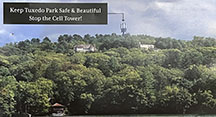
The second proposed tower located at the site of the Village of Tuxedo Park water towers on Ridge Road. A public meeting with Verizon has been scheduled for September 30, at which time representatives for the carrier are expected to present their project and answer questions from the Board and the Public. Several concerned residents came forward this past week during the September 18 Board of the Trustees meeting to voice their concerns with the proposed Tower and to urge the Board to thoughtfully formulate and adopt regulations for wireless communications before moving forward. Click here to read our full meeting coverage and/or watch a video of the meeting. Additionally, an anonymous mailing urging residents to come together to “stop the cell tower” was circulated throughout the Village earlier in the month. Click here to view that mailing.
If approved these would mark the second and third towers for Verizon, with one already in operation in Sterling Forest near the old Ski Center.
Please help TPFYI to continue its vital service to our community.
Since its inception in 2006, TPFYI has been the only consistent and reliable local news source for our community. We wish to continue being your local news source but need your support to do so.
TPFYI strives to ensure that residents have a balanced and unbiased source of timely and relevant news about current issues that impact our lives, village and town. TPFYI covers and reports on Village and Town municipal meetings in an effort to help keep you well-informed on the activities of our local governments.
Additionally, the site boasts a fully comprehensive community calendar (updated on a daily basis), a robust directory of local contractors and professional services compiled by residents and a consistent stream of relevant, community-based feature content. With an archive of extensive municipal reporting that dates back to 2006, the site is a tremendous local resource.
Expenses to maintain TPFYI run approximately $15,000 per year, with the majority used to pay our free-lance reporters to attend all municipal meetings, write articles and featured reports as well as our Web Master, who keeps the site and social media accounts updated on a daily basis.
If you wish to show your appreciation and support for TPFYI with a donation, your gift can be anonymous or choose to be listed on the TPFYI website as a Friend ( up to $500), Supporter ( $501 to $1,000) or Patron ( $1,001 plus).
Thank you in advance for your continued support.
Donations can be made through our GoFundMe by clicking here.
Checks should be made out to Tuxedo Park Communications LLC and sent to:
TPFYI
PO Box 681
Tuxedo Park, Ny 10987
Meet The Candidates for Board of Education (Posted 5/10/24)
The 2024 School Board election and budget vote will take place on Tuesday, May 21. This year, six candidates are vying for three open spots on the Board of Education: incumbents and William (Bill) Givens, former BOE member and President Joe Rickard and newcomers Kelly Spranger, Chris Scanlon and Bonny Takeuchi. Current Board member Alyssa Horneff will be retiring after having served one term.
The make-up of the school board is extremely important as it has a direct impact on the future of the School District as well as every one’s taxes. In addition to the annual budget, the Board of education is responisble for developing and adopting the policies that drive the District, providing oversight of any facility-based issues and supporting the Administration as they work to develop and implement strong programs. Therefore, understanding these candidates, their areas of expertise and their levels of experience is crucial in making an informed decision.
In an effort to inform the community, TPFYI presented each candidate with a basic questionnaire, designed to focus on their biographical information as well as their levels of experience and reasons for running. What follows are their responses, unedited and in the order they were recevied.
Education/Degrees:
B.A. in Communication Arts from Marymount Manhattan College in NYC
Vocation/Employer:
Freelance PADI Scuba Instructor for Blue Water Divers NJ
Years of residency in Tuxedo:
Kelly Spranger has been a resident of Tuxedo for 16 years this June 2024
Volunteer Work in the Town of Tuxedo:
Kelly Spranger has spent the last 4 years volunteering for the Pollination Meadow in Tuxedo creating a community garden. Kelly was the President of PTO and a PTO member and helped the Town of Tuxedo’s Recreation Dept with many events such as Family Fun Day, Halloween and various town wide events. Briefly, why are you running for The Board of Education?
I am running for the BOE to help support a strong vision for our school, be a ‘consensus builder’ to maintain a good balance, and team building for our Board of Education to make decisions for a healthy school system. What are the most important issues currently facing the School District and if elected how would you propose to address them?
With a small school, it is always important to be a cheerleader for our school district to continually increase enrollment. If elected, I would continue to be that cheerleader and help with community outreach, helping with events to spread the word how terrific our school is and how much we have to offer to students in Tuxedo. Maintaining current students is equally important and I would work with parents, teachers and administrators to promote our school so we keep the students we have through graduation.
Academics are key to that enrollment. Staying on top of the most competitive academic programs and after school clubs would be my top focus so that we can improve and enhance our school district. Keeping our students, increasing enrollment and getting our school to the top 100 are my key goals if elected.
JOE RICKARD Name:
Joe Rickard 2024
Education/Degrees:
BA, History, Queens College
MA, Education, St John’s University
MBA, Marketing, Hofstra University
Vocation/Employer:
I started my career as a NY State certified teacher, and have taught and coached at the HS level.
My current company is Intellective Solutions, I have extensive educational and management experience.
Before starting Intellective Solutions, I have had senior management experience in two global 500 companies,
Years of residency in Tuxedo:
My wife Maureen and I have lived in Tuxedo for 23 years. We have two grown daughters and five grandchildren.
Volunteer Work in the Town of Tuxedo:
Current member of the Tuxedo School District finance and audit committee
Social Member of the Tuxedo Ambulance Corps
Former Board President of the Tuxedo School District
Former Member of the Town of Tuxedo Recreation Board
Former COVID-19 Community Liaison for Food Supplies
Briefly, why are you running for The Board of Education?
I am running for the Board because I strongly support the Tuxedo District and our Town. I have actively advocated for the school district. I believe the future of the school requires responsible financial management and a stronger emphasis on academic excellence.
I have the professional and nonprofit experience to add value to the Board and District.
As a grandparent, I have a front-row seat as my daughters navigate the pressures of managing busy lives I also understand the unique challenges and tough road ahead for teachers, parents, and students in a post-COVID 19 world. I want to be part of the solution. I sincerely believe the District could be well-positioned for the future. I will provide the hard work and expertise to make that possible.
What are the most important issues currently facing the School District and if elected how would you propose to address them?
The top issues facing the district include:
Drive toward Academic Excellent
We are a small district with a low enrollment level. This has been the history of the district. In the current environment, parents are more involved and savvier about what constitutes a great school. We continue to lose students to neighboring schools and districts.
We must improve the perception of the district’s academic performance to ensure new parents will buy residences in the Tuxedo Reserve and send their children to our district. This is a district and town imperative. The old ways are not good enough. I will strongly advocate that every program and work process in the district is evaluated and tested.
Additionally, we must do a better job with community outreach to tell our story. We have a great many positives to share while we improve the academic and perception of the district.
Management of New Assessments from Tuxedo Reserve
The recent history of poor audits and financial management is behind us. The current administration has put us on the right path. We have a high level of accountability and transparency. I have worked hard over the last four years to help with that recovery process while keeping tax rate increases low.
The challenge is to ensure we have a qualified Board of Education who can provide the oversight and strategy to manage new assessments and payments from the Tuxedo Reserve. This is a challenging proposition because we must ensure adequate reserves are in place while we absorb new students into the system. I will make sure this will be done professionally and transparently.
WILLIAM (BILL) GIVENS Name:
William (Bill) Givens
Education/Degrees:
Bachelor of Science (Major: Economics / Dual Minor: Computer Science & Political Science)
Vocation/Employer:
28 Years in Finance / Managing Director at Morgan Stanley
Years of residency in Tuxedo:
15 Years
Volunteer Work in the Town of Tuxedo:
Current TUFSD Board of Education member
Current chair of the TUFSD Finance & Audit Committee
Coached many years of T-Ball in the Tuxedo Little League
Tuxedo Trail Angels
Volunteered at the Tuxedo Park Library’s Memorial Day Community Picnic
Chaperoned multiple TUFSD School field trips
Worked volunteer events for the Tuxedo PTO
Hoboken Community Center (food bank) – Hoboken, NJ
Community Foodbank of New Jersey – Hillside, NJ
Briefly, why are you running for The Board of Education?
It has been an honor to serve on the Board of Education for the last 3 years. Tuxedo is special for many reasons, but above all are the incredible teachers, staff, and administration that are helping to form the future of our community. I am running for re-election because I care deeply about our school and the need to improve education, while responsibly managing the district’s finances. As a current board member, I have been a strong advocate for academic excellence, improved governance and oversight, and the wise use of taxpayer resources. My wife and I currently have 2 children who are thriving at TUFSD, thanks to its many devoted teachers. Our oldest, a proud Tuxedo graduate, just finished up his first year at Purdue University with a 4.0, where he is an aerospace engineering student, which is a testament to TUFSD’s STEM foundation.
As an independent candidate with current board experience, finance background, and my only allegiances being to taxpayers and students, I am uniquely qualified to tackle the many challenges that face the district. If reelected, I will continue to advocate for our children, hold the school’s administrators and board accountable for academic excellence, and demand that our tax dollars are spent wisely. I have strong analytical, finance, and communication skills and am not afraid to ask the tough questions that should be asked, which I think are essential tools for effective board service.
What are the most important issues currently facing the School District and if elected how would you propose to address them?
While the below answer is expansive, so are the issues facing the district:
Budget: With a tiny tax base, we need to be disciplined in both our budgeting and spending and it is critical that the board exercises its budgetary oversight role. As the current chair of the district’s Audit & Finance Committee, I have been deeply involved in the creation of and adherence to the last 3 budgets. While our taxes are high, we do have the lowest school tax rate in Orange County. The Audit & Finance Committee worked closely with the Superintendent to build the proposed 2024-2025 budget, which supports critical programs, but keeps the tax rate increase to a minimum (1.88%), despite the inflationary backdrop. During my tenure on the board, we have also improved fiscal reporting, oversight capabilities, and public transparency, and I am committed to ensuring that the district is prudently using taxpayer resources.
Curriculum: One of the advantages of a small school is the ability to lean in on more personalized student instruction. During my tenure on the board, the district added resources for literacy and mathematics at the elementary level to ensure that our students have a solid foundation from which to build on, and we are beginning to see positive results. In addition, the district has put new school principals in place, who are focused on curriculum and instruction. Even with these improvements, more is required. To get to the next level, additional collaboration is required between the administration, teachers, parents, and the board.
Growth: The debate over Tuxedo Farms is over and there is no question that TUFSD enrollment needs to increase to garner some of the fiscal and academic advantages that a scale educational institution can offer. When ground is broken on this project, the district will receive an infusion of capital from the developer. However, this money is a meagre down payment compared to the increased enrollment numbers the district will face in the coming years. Will we be positioned to handle these students in a responsible way, that prioritizes educational outcomes, and ensures tax dollars are being spent intelligently? The strategic decisions that will be made by the next board will determine how the district reacts to this growth, whether educational outcomes are improved or degraded, and whether the taxpayers can reap the benefits of a broader tax base.
Stability: The consistent turn-over in the district’s superintendents created a historical lack of fiscal discipline and strategic vision/execution. The board should play a more active role in promoting and supporting stability and avoid many of the destabilizing actions of the past. A common vision and teamwork will help enable the district to obtain top 100 school status.
Conflicts of Interest: While not uncommon in small towns, close familial ties between employees and board members gives rise to natural conflicts of interest. While manageable, these conflicts can create a misalignment of interest, undermine a superintendent’s ability to manage the district effectively, and call into question a board’s ability to provide objective oversight, including in the negotiation of union contracts. Voter involvement and turnout are key to ensuring proper alignment of interests on the board.
Strategic Vision: In order to obtain our strategic goals, the district needs to continue to look forward, not back, strive for excellence, provide for stability, and enable student success. We need to bring the district together, working toward the common goal of executing on the board’s vision of achieving top 100 school status so that our children have a foundation to succeed in life. As a current board member, I have been holding the district accountable for executing on this strategic goal and commit to pushing them forward if re-elected.
While the issues are plentiful, they are entirely solvable, and I commit to partnering with the board and the superintendent to work through each. I am also proud to endorse Joe Rickard and Kelly Spranger, both of whom are extremely well qualified, independent minded, and will objectively push for improved educational outcomes and accountability for taxpayers.
BONNY TAKEUCHI Name: Bonita “Bonny” Takeuchi
Education:
Graduate Tuxedo High School, 1969 (Salutatorian)
BA English/Education, College of New Rochelle, 1973
Master of Arts in the Teaching of English, Grades 7-12, Columbia University, 1974
Town of Tuxedo Summer Recreation Program: Starting as a camp counselor, I spent the next 30 years in the program, eventually becoming its director. I played an integral role in writing the camp’s state-mandated safety plan. As a certified Water Safety Instructor and Lifeguard Trainer, I taught classes in Advanced Lifeguarding as well as instituting the camp’s first pre-school swim program.
Sacred Heart Middle School, Bronx, NY 1974-1980: Fifth grade teacher
Tuxedo Union Free School District, 1987-present: multiple capacities
Substitute teacher, grades K-12 for 20 years, including two long-term leave replacements in the English Dept.
ISS (In-school suspension) monitor for 17 years
District teacher for at-home instruction
Cheerleading coach
Student Council Co-Advisor (volunteer) for 6 years
Yearbook proofreader (volunteer) for 20 years
Chaperone, athletic events for 22 years
Years of residency in Tuxedo: 67 years
Volunteer Work in the Town of Tuxedo:
Tuxedo Park Library Board of Trustees (26 years): Duties included budget preparation and vote, participation in focus groups and strategic planning for two major renovations, and fundraising
Wee Wah Beach Club (35 years including 34 years as President): Duties included staffing, supervision, scheduling, safety plan training, and ensuring compliance with all Orange County Dept. of Health regulations, New York State Sanitary Code, and insurance requirements.
Tuxedo PTA Executive Committee (10 years, including 2 years as President and 2 years as Vice-President)
Cub Scout den leader (5 years; instituted Tiger Scouts to Tuxedo Scouting Program)
Library Memorial Day Picnic Committee (19 years): Duties included planning, appealing for donations, and all activities from set-up to clean-up on the day of the picnic.
Senior Citizen Advisory Committee: Duties include developing and distributing survey, presentation of results, and working on implementing recommendations.
Tuxedo Annual Memorial Day Parade Committee (6 years): Duties include: arranging police coverage, notifying town organizations, engaging a speaker, and coordinating the ceremony at St. Mary’s Church.
Briefly, why are you running for The Board of Education?
I have been a part of the District’s past. I am part of its present. And now, I hope to be part of its future. As an active community volunteer, former full-time school employee and alumnus, I have a deep-rooted knowledge of the District. I feel that this long-time and ongoing relationship gives me a unique perspective to bring to the Board.
What are the most important issues currently facing the School District and if elected how would you propose to address them?
I feel that there are three issues that need to be addressed in order for our District to be able to move forward in providing educational excellence.
First and foremost, the educational opportunities and extra-curricular activities for our current students, along with their safety, need to be the focus of the School Board and administration. I would pursue methods for realigning the budget to provide our students with more opportunities and activities without raising taxes.
The safety of our students and buildings must also be a priority for the Board of Education. Sometimes budgetarily, that means hard decisions have to be made. We need to look at our needs and assign priorities based on what is the safest and most feasible. I would support an initiative to study building usage and improvements.
Planning for future growth is of utmost importance for our District. With the development of Tuxedo Reserve, we need to be prepared for the eventual influx of more students. This will be a new challenge for us, and we should strive to find ways to make this change successful. I would like to see focus groups of parents, teachers, administrators, and community members formed to study the many issues that need to be addressed. Their input would be invaluable. By keeping our district vibrant and strong, we will be prepared to meet this challenge. We must focus on the now and prepare for the future.
GARY HEAVNER Name: Gary Lee Heavner
Education/Degrees:
Ramapo High School - 1983 (Class President)
Vassar College B.A. – Political Science 1987
Minor in Secondary Education
Licensed in NY & NJ in Secondary School Education – Social Studies
Pace Law School - Juris Doctorate 1994
Vocation/Employer:
During high school and college, I had the typical range of jobs, including some interesting ones as an Army & Navy store clerk/tailor, landscape designer, construction worker, Assistant Boy Scout Camp Director, bowling alley pin setter, forklift driver and Deejay. After college I was a high school history teacher and taught the Gifted & Talented classes. I also enjoyed coaching varsity soccer, basketball, and bowling teams.
For many years I also helped run a family restaurant.
After Law School, I was a career criminal prosecutor for almost three decades. Most of my years were spent as a Bureau Chief and Executive Assistant District Attorney in Orange, Rockland, and the Bronx. For several years, the Governor hired me to lead the investigation into 'waste, fraud and abuse' on the largest design-build transportation project in the country.
I am now partially retired, working part-time as a partner in a small boutique law firm here in Tuxedo. I am also a part-time Rockland County Senior Assistant Public Defender in charge of Grand Jury and a P.B.A. Attorney for over 100 NY police departments focusing on union contracts and discipline.
Years of residency in Tuxedo:
My son started attending Baker in 2016
Volunteer Work in the Town of Tuxedo:
Tuxedo PTO Member
Tornado Athletic Booster
Baker High School Musical Parent Booster
Tuxedo Memorial Day Parade Float
Eagle Valley Christmas Parade
Eagle Valley Holiday Decorations
Tuxedo Trail Angel
NY-NJ Trail Conference – Head Trail Maintainer of Long Swamp Trail
Sterling Forest Fire Tower Volunteer
Friends of Sterling Forest
Boy Scouts of America - Council Vice-President - 20+ years
Boy Scouts of America - Eagle Board of Review Member - 20+ years
Boy Scouts of America - Order of the Arrow - Lodge Advisor
Eastern NY Youth Soccer Association State Board Member
Tuxedo Police Reform Committee
Briefly, why are you running for The Board of Education?
Nine years ago, we were looking at private middle schools for my son Ted to attend. One day while driving down Rt. 17 together, we passed Baker and saw a large sign touting its STEM program and inviting out of district students to attend.
A little research and a phone call later, Ted spent a ‘Day as a Tornado’. The students, teachers and staff were wonderful! We were hooked. Needless to say, Ted spent the next three years as an out-of-district student. We lived too far away in Pomona to get busing, but the eight or so hours of weekly driving back and forth was worth it.
Eventually, as Ted was more involved in after school activities and needed to be at the school more often, we decided to leave the house my father built with his own hands in the 1950’s and move to the Tuxedo School District.
Due to the local school district boundaries, it was a bit confusing at first, but eventually our realtor knew to ONLY show us houses in the TUXEDO school district. We landed in Maple Brook, and Ted was finally able to take the school bus to Baker (until COVID remote learning was soon thereafter instituted).
My family quickly became even more active in many activities and groups here in Tuxedo. Individuals from those school and community groups, including the PTO and several others, urged me to run for the board.
I had already long been interested in service to local schools, their students, and the local community. In 1981, I was elected to be the student representative to sit as an ex-officio member of my local school board. I have never stopped attending school board meetings since.
Professionally, as a prosecutor, over several decades, I have investigated and prosecuted illegal and improper conduct and actions by dozens of school boards, school districts, administrators, teachers, and staff. I understand how successful Districts are run.
Based upon my love for the district and my experiences, I agreed and won my seat three years ago.
WE can do better
What are the most important issues currently facing the School District and if elected how would you propose to address them?
I am running for re-election because the work is not yet done. Sadly, the current and recent Board leadership and majority have made certain decisions and made many compromises that are not in the best interest of the students, teachers, staff, and taxpayers.
WE can do better to address the issues facing the District by changing priorities.
Everyone wants a lean and mean budget. So why can’t we move more of our tax dollars already in the budget to areas that will DIRECTLY affect our students in a positive way. We can, but a top-heavy administration will need to be downsized by a strong Board majority.
As a member of the Safety Committee, it is woefully clear that we need to improve several aspects of the buildings and campus. Again, this can be accomplished only with a Board majority that makes it a priority, instead of acquiescing to feeble compromises.
Finally, the future of the School MUST be safeguarded with stronger Board members. We have a large imminent influx of students enrolling soon; we are not ready. A strong board majority cannot include those who have called to close our school. A strong board majority cannot include those who have caved in to heinous HR decisions on the eve of Graduation. A strong board majority cannot include those who have trusted the developers to the monetary detriment of our District.
The solution to all the most important issues currently facing the School District begins with stronger, independent Board members who are not afraid to do the right thing.
WE can do better
CHRIS SCANLON Name:
Christopher M. Scanlon
Education/Degrees:
I attended SUNY Geneseo and earned a Bachelor of Science in Management.
Vocation/Employer:
Early in my career, I worked for Republic National Bank and Strang Hayes Consulting.
For the last 27 years, I have worked for Alliance Bernstein as the Head of Global FIX Connectivity and US Trading Technology.
My strengths include knowledge of financial services, equities and derivatives trading technology, crisis management, disaster recovery planning, vendor contract negotiations, vendor relationship management, cost control, financial planning, and budgeting. I currently manage an annual $25 million equities and derivatives trading technology budget. I believe my skill set would be beneficial on the Board of Education.
Years of residency in Tuxedo:
I have lived in Tuxedo for a total of 14 years and have paid property taxes in Tuxedo on various properties for a total of 30 years.
Volunteer Work in the Town of Tuxedo:
I created a non-profit volleyball feeder program called the Tuxedo Volleyball Club, which, prior to Covid-19, used the John P. Mottola Gymnasium for games, practices and tournaments. With the money earned from tournament fundraisers, the club was able to donate brand new uniforms for the George F. Baker High School JV and Varsity Volleyball teams, a new referee stand, volleyballs, volleyball carts and other equipment.
When my wife was an officer of the PTO, I assisted with events like the PTO fundraiser for recreation equipment and did IT related tasks.
I helped coach my girls’ teams in Tuxedo Little League.
I have chaperoned a George F. Baker trip to Spain, senior proms, and other high school events since 1993.
I assisted with Girl Scouts events when my children were members.
I have chaperoned GGM field trips including annual hikes through Harriman State Park
Outside of Tuxedo, I coached soccer and assisted with volleyball as a volunteer. Yearly, through my company, I volunteer at food pantries, animal shelters, cleaning up Central Park and raising money for Ronald McDonald House.
Briefly, why are you running for The Board of Education?
My three daughters received a top-notch education at Tuxedo. Two of my three daughters now have a Master of Arts in Teaching. The foundation of their education and their love of learning started in GGM and continued at GFB. I know and appreciate the value of a Tuxedo education. I am running because I want to give back to the school and community which has given so much to my family. I want to build programs and policies that support our current students and their families while being fiscally responsible to the community.
What are the most important issues currently facing the School District and if elected how would you propose to address them?
We need to ensure that our town has a thriving school and do whatever it takes to guarantee the future of the district. While planning for future development, we need to focus on the needs of the current students and their families. The school should offer enriched educational programs to retain our current student body and attract families to our town and school. As a Board member, I would support programs to increase student performance and add extracurriculars.
I believe the district must focus on making students prepared for a digital world, while making them good citizens and financial stewards. I envision rigorous programs in financial literacy, civic readiness and more in-depth digital literacy classes.
I would also support more robust job readiness and business programs.
Our district must continue to be responsible to its taxpayers. I would propose having a rebalancing of the budget to allocate funds for student programs rather than adding more administrative and consultant costs. This would enrich the school, while being fiscally savvy with taxpayer money.
School safety is a paramount concern. Safety includes security and quality buildings. GFB and GGM need system and structural updates. I would advocate for the use of the reserve funds to improve our buildings for our current students.
The Tuxedo Reserve will bring increased students into our district. We must start now with the planning to increase space and look at budgeting scenarios to prepare for the near future. I would advocate for feedback from stakeholders in the town and community to weigh in at special meetings or via electronic communication.
Town of Tuxedo Set to Become "The Gem of New York" (Posted 5/1/24)
Town Supervisor Dave McMillen and Council member Deirdre Murphy have worked together to bring Britalians TV to the Town of Tuxedo in an effort to enlighten the world and garner interest in our local community. This partnership aims to showcase the unique aspects of Tuxedo, from its scenic landscapes and historical sites to its emerging vibrant local economy and community events and partnerships.
By collaborating with Britalians TV, a platform known for highlighting cultural and tourist attractions, they hope to attract more visitors, boost the local economy, and share the rich heritage of Tuxedo with a broader audience. Their efforts include organizing special events, featuring local businesses, and promoting Tuxedo as a desirable destination for both tourists and potential residents.
Britalians TV will be coming to Tuxedo the first week of June to begin filming the first of two 65-minute documentaries about the town, the village, the people and the rich history. This show is called "Humans of the World".
As a result of the Gem of New York designation, Tuxedo NY will receive a targeted 12 month international media and creative marketing plan made of 3 pillars commissioned, managed and delivered by Britalians TV to promote the town of Tuxedo as the Gem of New York and increase tourism as well as individuals looking to invest and do business in the town of Tuxedo. The Gem of NY is an exclusive designation within the State of New York to grow Tourism and Business opportunities Internationally and Nationally.
Britalians TV is on Amazon Prime, ROKU, Vidaa, Google TV, Android TV, Apple TV, and Samsung TV Plus.
Britalians TV reaches 275M Households, 206M Monthly users and 177 countries worldwide.
Marco Biagioli and Erica Melargo from London are the Ambassadors for Tuxedo NY worldwide. They are the founders, CEOs, and producers of Britalians TV, the world’s first interview-centric television channel.
They are passionate about connecting with people and believe that diplomacy and positive mental health are essential to creating a better future, and that these are assets for any town that wants to be a force for good in the world.
Active Shooter Seminar To Take Place April 18 (Posted 4/5/24)
On April 18, the Tuxedo Police Dept. will present an “Active Shooter Seminar” hosted by the Town of Tuxedo.
This is your chance to ask the professionals about best strategies for mitigating these challenges.
Location: Town Hall, 1 Temple Drive
Time: 7:00- 9:00 PM
No Reservations Required
From Chief Trazino:
Prior to being appointed as the Chief of Police in Tuxedo in 2022, I was the Team Leader of the Special Operations Group (the county SWAT Team) in the Orange County Sheriff's Office.
At that time, we had a very robust Active Shooter Program that we provided to the county and a good portion of my time and effort was dedicated in support of that program.
Our focus was to provide training and education to Police, Institutions (schools, hospitals, houses of worship, businesses, etc.) and the Public
Upon coming to Tuxedo, I continued these efforts on both the local and regional levels both through the Tuxedo Police Department when applicable or through my business, Archangel Operations, when providing services for individual entities outside of the purview of public service.
I firmly believe that the best approach to counter the threat of violent criminality (including Active Shooters) is education and preparedness.
We do this through the "3 Partner Rule".
For example, when focusing on Public Safety, the "3 Partners" are:
First Responders
your Municipality
the Public
Due to the fact that in the real world these events are sudden and unannounced, each one of these "Partners" must be educated, informed and prepared within applcable levels to recognize and respond to these crises.
If each "Partner" does their part, the mitigation and response is much more effective and more likely to result in a better outcome.
The good news here is that your [1.] First Responders (Police/ Fire/ EMS) have trained and contiue to train in this topic and your
[2.] Municipality (the Town of Tuxedo Representatives & employees) fully support, engage and cooperate in these efforts.
The last Public Safety "Partner" is [3.] the Public: the more people that attend, then the more informed/prepared members we have in the citizenry should they find themselves involved in an emergency.
All 3 Partners must work together to stop, mitigate and recover from any incident.
Once a baseline of education and preparedness is set, then it is just a matter of maintenance; providing occasional updates and further seminars for new questions or developments.
This is the second Active Shooter Response for Civilians seminar that I am happy to provide to the community since coming to Tuxedo and I truly hope that everyone that can attend chooses to come.
It is the Public's chance to ask direct questions about topics that almost everyone has questions about.
As the winter fades, you should know that we at the Tuxedo Police are busy planning the nest round of training for your First Responders as well.
I also use the "3 Partner Rule" for First Responder training, as we must work together at emergencies:
[1.] Police [2.] Fire [3.] EMS.
The public seminar on April 18th is a part of those ongoing efforts.