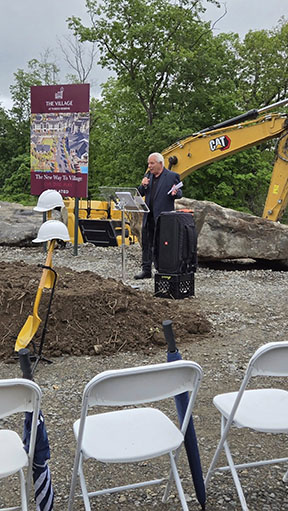
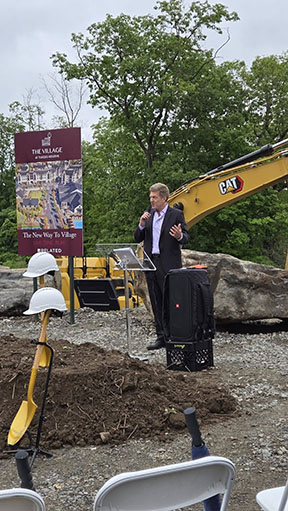
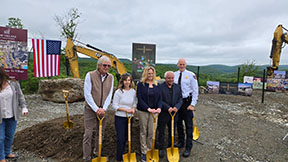
Tuxedo Reserve Breaks Ground, May 28, 2025 (Posted 5/29/25)
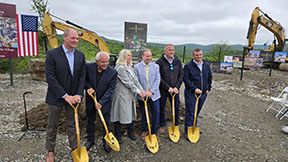
Members of the Town Board, The Planning Department, The Chamber of Commerce, The Tuxedo Police Department and the TUFSD Community were on hand at the official ground breaking ceremony for the Tuxedo Reserve Development on Wednesday, May 28.
"Today marks a true milestone for the Town of Tuxedo as we officially break ground on the Tuxedo Reserve community, a long-anticipated vision that is finally becoming reality," stated Town supervisor Dave McMillen.
"This moment represents more than just the start of construction. It’s a turning point, an opportunity for growth, for innovation, and for reinvesting in the future of our town and region. For too long, this corner of Orange and Rockland Counties has awaited the kind of thoughtful development and attention it rightfully deserves. Today, we begin a new chapter.
Thanks to the collaboration between The Related Companies and Lennar, Tuxedo Reserve will bring over 1,600 new homes to our community, beginning with the West Terrace neighborhood, scheduled to open in 2025. But this is not just about housing, it’s about creating a balanced, sustainable future that honors the unique character and beauty of Tuxedo.
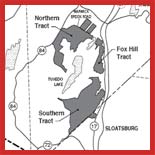
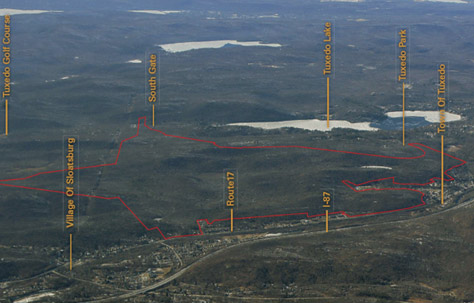
Of the 2,400-acre site, nearly 1,750 acres will remain preserved as open space. This ensures that our natural surroundings are protected even as we grow. With plans for parks, trails, and a new vibrant community center, this project is designed to foster connection, recreation, and a sense of place.
Today’s groundbreaking is a testament to years of planning, partnership, and persistence. To our development partners, community leaders, and everyone who played a role in bringing this vision to life, Tuxedo’s future is unfolding before us, and it all begins here, today"
Town Planning / Architectural Review Board Meeting December 5, 2023
The Town Planning Board met on Tuesday, December 5 at 7pm. Board member Susan Boyle was absent.
Public Hearing – Upland Park – Clearing Filling & Grading Permit:
As previously presented in November, the applicant explained that the limit of disturbance for this neighborhood will be the same as previously approved. There is a limited window of time during which the applicant is permitted to take down trees and therefore they are trying to facilitate a permit that will allow them to do this work over the upcoming winter months.
As there were no comments from the public, the hearing was closed.
Regular Meeting:
Board Chair John Banyo opened the regular portion of the meeting by recognizing Board member Chris Kasker, who will be vacating his seat at the end of December to join the Town Board, to which he was elected in November. Commenting that Mr. Kasker had provided valuable input and service during his time on the Board, Chair Banyo further noted that he would be remiss if he did not acknowledge his years of service to the country. “He was in the army for 20 years serving at West Point and the Pentagon with tours of duty in Iraq and Afghanistan,” he stated, going on to say that he was certain that Mr. Kasker would have the best interest of the Town in mind while serving on the Town Board. “The Board has been a better Board because of your service and on behalf of the Planning Board we wish all the best,” he concluded.
Mr. Kasker thanked Chair Banyo for his comments adding that he definitely had the best interest of the Town in mind and that he hoped to continue the great work the Planning Board has been doing while also doing whatever he could to support Lennar and Related to get the Tuxedo Farms project going.
Before moving on to the applications, Board alternate Justin Jennings inquired about process of reviewing Tuxedo Farms materials. He noted that in past discussions it had been indicated that the Boards authority was restricted to compliance with the SmartCode and the architectural guidelines, but he does not believe this is entirely correct. Based on the wording in the Special Permit he feels that there is guideline that requires them to check the compliance with these codes but that they also have the authority to review and approve as they would during any normal process. He feels this needs to be considered moving forward. “I don’t believe our authority is limited to only technical compliance with the SmartCode,” he reiterated.
Board attorney Kelly Naughton responded that she was working to prepare a detailed memo for the Board which clearly outlines their authority and jurisdiction under the Special Permit. She has not circulated it yet because she did not want to confuse the Board prior to their meeting that evening, but they will have the memo before their next meeting.
Tuxedo Farms – Upland Park – Clearing Filling and Grading Permit:
Board engineer Sean Hoffman provided some brief comments after which Board Attorney Kelly Naughton outlined 3 conditions of approval. Board member Bill Friedlich inquired as to whether the stumps would be removed as part of the clearing process. The answer was no. The applicant is planning to fall the trees and organize them for removal from the site. Chair Banyo inquired about the removal of Ash Trees as it pertains to restrictions surrounding the Emerald Ash Borer. He was told that in all likelihood the DEC would manage these restrictions. Board member Ned Kugel inquired as to when the applicant would be appearing before the Sloatsburg Planning Board with regard to the removal of trees on their portion of the land. The answer was December 19. Following some further discussion, the Board unanimously approved the permit application with the three conditions as previously outlined by their attorney.
Tuxedo Farms – Approval – Amended Subdivision – The Commons/Quail Rd.:
The applicant is looking to further subdivide the parcels within the Commons area of the development in order to allow for the development of buildings on parcels. Lennar and Related will be working together on this section of the development and this change would allow the individual parcels to be developed and closed on independently. There are no other changes aside from the reconfiguring of the lots.
There were no comments from the Board consultants. Board attorney Kelly Naughton outlined seven proposed conditions of approval, after which the Board voted unanimously in favor of approving the amendment. Chair Banyo then inquired as to whether the Board would be able to grant site plan approval independent of Architectural Review Board approval and the answer was yes. He subsequently requested that a resolution for site plan approval be prepared for the next meeting.
Tuxedo Farms – West Terrace – Subdivision/Site Plan/ARB – Schedule Public Hearing:
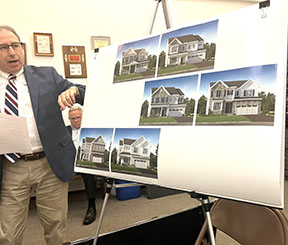
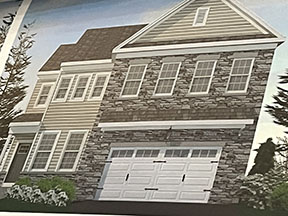
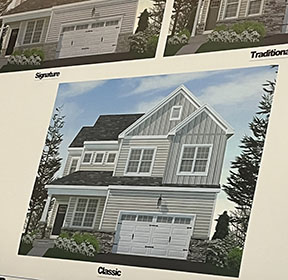
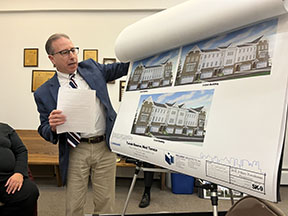
The applicant presented the Board with new renderings for the various types of proposed homes in the West Terrace section of the development based upon their feedback at the previous meeting. Building materials and various color combination packages were also presented (stone, siding and shingles). These things were discussed at some length. Ultimately, a public hearing was set for January 2. There will be another detailed presentation for the benefit of the public at that time.
The Town Board held a Special Meeting on Tuesday, November 22, 2022 at 7:00 pm. All members were present. The purpose of the meeting was to consider the 2022 Special Use Permit for the Tuxedo Farms development. They Board began by reading the 10-page resolution out loud, taking turns with the reading.
A copy of the resolution can be viewed here.
Next, Supervisor English gave some remarks, listing some of his reasons for supporting the project. He really appreciates the “missing middle” concept of the design which, he feels makes the project meet a market that Tuxedo and Orange County do not provide for prospective residents. Also, he likes the fact that the project will be tax positive for the Town and the School and that it will, among other things, give the Town a much needed new wastewater treatment plant.
Next, Deputy Supervisor Lindsay gave her thoughts on the Special Permit. She believes that this is a truly exciting time for the Town and that residents can look forward to a project that will be net positive for both the Town and the School District while providing an “interesting and vibrant” new commercial space and meeting market trends. She briefly outlined the process that had brought them to this juncture, thanking everyone for all of their hard work. To read her thoughts in full, click here. Councilmember Reichgott commented that the only thing he has routinely hears from residents, besides “when is Tuxedo Farms going to happen?” was “what about economic development in this Town?” He feels that this project will address both of those things. Following these statements, the Board voted unanimously in favor of adopting the resolution. This was met with a round of applause from those in the audience.
Supervisor English next invited comments from the public who were present in Town Hall. Related Vice President Greg Gushee expressed his satisfaction with how the project has turned out, referring to the negotiation process as a “public/private partnership which resulted in an amazing plan.” Mitch Newman from Lennar (project builder) noted that it was rare to see the kind of commitment from a Town Board and he felt it would make for a better outcome. There were also positive comments from Planning Board Chair John Banyo, Code Enforcement Officer Dave Maikisch and Highway Supervisor Rob Dollbaum. Members of the public adding their support and thanks were Irene Denaro, former Town Board member Dave McMillan and Nick Ballistreri.
Wishing everyone a Happy Thanksgiving, Supervisor English adjourned the meeting at 8:08 pm.
Notice of Special Town Board Meeting November 22, 2022
The Town Board will hold a Special Meeting on Tuesday, 11/22 at 7:00pm to consider a resolution to approve an amended Special Use Permit for the Tuxedo Farms Planned Integrated Development. The meeting will be in person at Town Hall and also on Zoom.
The Town Board met together with representatives from the Related Co. and their consultants and the Tuxedo Union Free School District and their consultants on Thursday, October 20, 2022 at 7:00 pm.
Supervisor English opened the meeting and explained that the purpose of coming together was to provide the representatives of Tuxedo Farms and the Tuxedo Union Free School District an opportunity to publicly discuss their differences on the project, which is currently undergoing SEQRA review by the Town.
Town Attorney Larry Wolinsky began by summarizing the current status of the application and where the Board is in the process. Before the project can move forward, the Town must complete their SEQRA review, which is almost done. The last remaining pieces relate the issues raised by the School District. Once these have been settled, the Board can complete the process and the project will advance to the next stage.
Next, the applicant summarized what they perceive to be the School District’s main concerns. There are four of them as follows:
Related changed the 40-acre lot that is to be donated to the TUFSD
The School Lot is not usable for TUFSD needs
Related is not living up to its promises of preparing the School Lot for school facilities
Tuxedo Farms is fiscally negative for TUFSD and will cost the Tuxedo taxpayer $1.28M per year.
Using a PowerPoint presentation, they proceeded to analyze and refute each of these concerns, concluding that the project as proposed, according to their research, would be tax positive for both the District and the Town.
The School District was then given the opportunity to respond.Superintendent of Schools Jeff White began his remarks by noting that while the District supports the project and wants to see it happen, they disagree with a number of what they consider to be assumptions and statements made by the applicant. He proceeded to elaborate on this in some detail with the assistance of his consultants, the District’s attorney and Board of Education President, Joe Rickard. In closing he reiterated that the School District wants to work with the applicant and that what they are asking for at this point is for the Town to hold off voting on the project until a solution that works for everyone can be negotiated. “When that happens,” he noted “I think we can move together as a complete team.”
After the School’s presentation, the applicant asked for time to discuss amongst themselves what they’d heard so that they could respond to the District’s points. The applicant and their consultants then left the room to have a conference. When they returned Greg Gushee, representing the Applicant, stated that nothing he had heard from the school had changed his mind that the project would be tax positive. Additionally, he noted that the District kept asking for the Town Board to hold off until an agreement could be reached, but an agreement had been reached and signed off on by both the School and the Town back in 2015. A copy an agreement signed by both Andrew Dance of Related Companies and Board of Education Vice President, Diane Petrosky, was presented. The agreement specified that the 40-acre parcel would be offered to the District in the form of a gift and further that two cash contributions totaling 2.5 Million would be made to the District at various stages of development. Based on this, Mr. Gushee concluded, there is nothing else to negotiate.
Superintendent White suggested that the applicant had used an incorrect equalization rate, calling upon the School’s Business Consultant, Anthony Cashara, to elaborate. Mr. Cashara pointed out that if the agreement presented by the applicant is realized, it will leave the School needing to raise taxes to the fullest extent allowed by the tax cap every year in order for them to realize any of the revenue.
Next, Town Planning Bonnie Franson, who has been working on the project since 1990, was called upon to offer her thoughts. She provided her recollection of the project timeline, noting that in 2015, for a variety of reasons, there was a shift and that the school had agreed to accept a cash donation in lieu of grading the property as originally proposed. This can be found within the finding statements. Having reviewed all of the current information as well as the concerns expressed by the TUFSD, there has been some confusion with regard to the numbers provided and she elaborated on where the confusion lay and how this had impacted their comparisons of the two sets of numbers that had been provided by the applicant and the school.
After some further discussion and a brief outline of next steps from Board Attorney Larry Wollinsky, Supervisor English stated after 3 hours he felt enough had been said on both sides. A motion to adjourn was passed unanimously at 9:55 pm.
Notice of Special Town Board Meeting October 20, 2022
The Town Board will hold an advice of counsel meeting at 5:00pm on October 20th. This meeting is for Town Board members and legal counsel only.
Additionally, the scheduled public meeting starting at 7pm is being held to facilitate discussions between the Town Board, Tuxedo Union Free School District, and Related (the applicant for Tuxedo Farms). There will be limited seating for the public at Town Hall, but the meeting will be live-streamed through Zoom and recorded. There will be no public participation. No action will be taken during this meeting.
The Town Board met on Thursday, June 23, 2022 at 6:00 pm. The meeting was held in the multipurpose room of George Grant Mason Elementary School. All members were present.
The main purpose of the meeting was a continuation of the public hearing on the application for the Tuxedo Farms project. As such, Supervisor English and the Board members made the same statements that they gave the week prior at the first hearing. This was followed by Town Attorney Larry Wolinsky, also repeating his remarks. Next, the team from Related and Lennar gave their presentation on the project. To see a copy of this presentation, click here.
The following public comments were then made: Joe Rickard, member of the TUFSD Board of Education began his remarks by noting that the School considers this great timing for the development. The District now has “a great Superintendent and great Principals with many years of experience” and the administrators and staff know how to run a great small school. However, he feels the project presents a challenge for the district as their current financial model and instructional program are built on a district of 220 students. Over time, the development will expand the district to over 600 students. The School Board is working on assessing building capacity, staffing and faculty needs. The new residents and the current taxpayers will expect the District to be flawless in their planning. They don’t feel that they can place hardships on them by waiting for assessments. Additionally, even in the best of times, fields and property for the district and town have been inadequate. Parents and students will expect recreation fields not only for the High School, but for the Middle School as well. The School District will need financial assistance and property in order to adequately transition the district to the larger student population. He then posed the following questions for the applicant:
Knowing that Related’s environmental, planning and engineering consultants are currently working with the district to develop a long-range plan of the impact and the timing of the impact, he wondered when it would be a good time for the school board and the town board to meet to discuss their findings?
In what timeframe can the financial assistance and property transfer be expected to be completed?
The School Board knows that the attorneys are in contact with each other, but they want to know what else specifically will be needed from the school district in order to facilitate the finalization of the agreement.
Kimberly Breiland asked if Related would be involved in keeping up the property once the building and the selling was done? She was told there would be an HOA in place to take care of that. Kelly Spranger said she was thrilled to hear that the Board of Education and the Town Board would be working together! She commented that there is a lot of history in Tuxedo and she hoped Related could be trusted to keep that history in mind as well as bringing new people to the Town and School.
Supervisor English then read 2 letters received by the Board into the record. One was from State Senator James Skoufis and the other from Michael Bruno. Both were very supportive of the project. Click here and here to read copies of these letters.
As there were no further comments, the public hearing was then closed. The Board will accept written comments from the public for the next 2 weeks (up until July 7.)
Next on the agenda was a Public Hearing on Introductory Local Law #4 of 2022: This is a law which already exists having originally been passed in 1998 but now the Board is updating it with new figures for the current project. Specifically, the law states that the maximum number of homes to be built in Tuxedo Farms is 1,609. Of those homes, no more than 500 units can be multi-family units and a minimum of 239 single family detached units shall be built. In addition, no less than 174 units shall be duplex.
There were no public comments on the proposed law. This public hearing shall remain open until Monday, June 27 at the regular Town Board meeting.
Developers Present Public with Revised Plans for Tuxedo Farms
As part of the public hearing this past Thursday evening, Related Companies and Lenar presented the Public with an updated, revise overview of the project, on which they hope to begin construction before the end of the year. Click HERE to view the presentation.
The Town Board held a Public Hearing on Thursday, June 16, 2022 at 6pm. The hearing was in person only and was held in the Multipurpose Room of the George Grant Mason Elementary School. All members of the Board were present.
Supervisor Ken English opened the meeting with the following statement :
“Good evening and welcome. Tonight’s Public Hearing is an important step in the renewal of the Tuxedo Farms’ proposal. This project will construct housing and commercial space needed to fulfill the Town’s Comprehensive Plan. This Town Board has been diligently working with a team of consultants, Larry Wolinsky of Jacobowitz and Gubits, our lead attorney, has extensive experience in large development projects. Bonnie Franson, our Town Planner from Nelson Pope, Voorhis, is a leading expert in the Hudson Valley with expertise in all facets of municipal planning. Both have been on this project for decades. And Sean Hoffman, our Town Engineer who has served the Town for several years, working for H2M Engineering and now has formed his own firm.
This team provides the continuity of experience and knowledge of this project that the Town Board needs.
The Town Board team, of Michele Lindsay, Deputy Supervisor, Maria May, Jay Reichgott, and Deirdre Murphy, councilpersons, and myself, have dedicated hundreds of hours over the last year, negotiating a plan that will bring forward the promise of our Master Plan. Supporting us throughout, Town Clerk, Marisa Dollbaum, has kept us moving forward, scheduling our meetings and organizing the many documents required. Thanks Marisa!
We’ve held more than 12 public meetings, eight of which were special workshops devoted only to this topic. Most were delivered by WebEx. We share each draft of our work on the Town’s website to keep the public informed. All of our meetings have been recorded and are accessible on our website. In tonight’s meeting, it would be impossible to reiterate all of the steps that have brought us to this point. Our goal is to update the Special Permit, holding on to as much of what was agreed to as possible. We will minimize the impacts on the environment and design a community that will invigorate our Town with the new residents needed to promote prosperity for our businesses and the TUFSD school.
Key to this project is the new state of the art WasteWater Treatment Plant that was constructed and completed about four years ago. This plant is essential to the Tuxedo Hamlet and will serve about 260 homes and businesses that urgently need its final connection.
We have worked hard to deliver a project that will meet the Town’s needs that includes opportunities for amenities like public meeting spaces, hospitality such as a restaurant, options for recreation, connections to our existing Hamlet, and an increased tax base to support our emergency services and schools. The project will add a housing mix that welcomes new families and young professionals looking to establish roots here in Tuxedo.
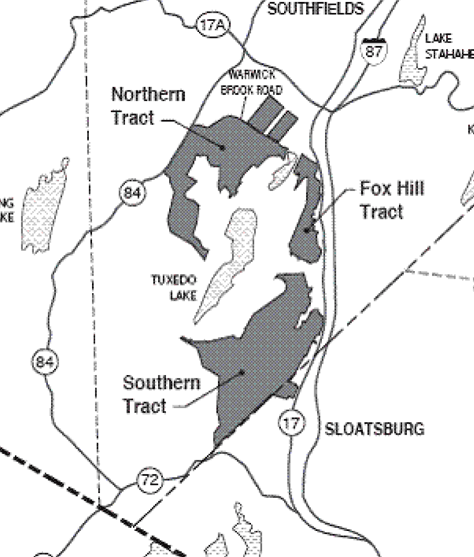
The fiscal analysis shows ample projected tax revenues, both to the Town and the School district. Traffic studies have been updated to include data that considered changes to the Rt. 17 corridor. Although the unit count has increased to 1,609 residences, about 60 acres of undisturbed land have been added to the project. The town received more than 700 acres of open space in the Northern tract off Warwick Brook Road, preserving more land adjacent to Sterling Forest. A proposed entrance from Southgate Road has been designated as an emergency vehicle only access. The agreement with the school, reached back in 2015, has been restored. As of today, I know there are still talks between the TUFSD and Related. I look forward to a final understanding.
County and local Planning Board reviews are underway. Extensive public comment has been submitted and incorporated into the various drafts that have been part of this process. All were given to Related and are being addressed.
So tonight, the process continues. We need to hear from you, the residents. We will listen carefully. A stenographer will capture all comments. We will then categorize them and consider all that we learn. We won’t be responding directly until we conclude the hearings.”
Following this statement, the individual Town Board members each made a brief statement. All of them are looking forward to this development seeing it as a positive step forward for the Town. Next to speak was Attorney Larry Wolinsky who outlined the process taken so far and set forth what will happen next saying that the Town Board and the Planning Board will review the application including the Technical Memorandum as well as comments received from the public and the County Planning Board.
Next on the agenda was a presentation from the team from Related (property owner) and Lennar (builder). To view this presentation, click here.
Following the presentation, the public was invited to speak and/or ask questions. Their comments were: Jerry Mottola commented that he has been a resident of the Town for almost 70 years. “I am tired of hearing about windows and finishes! Let’s get on with it…let them build!” he stated, adding…”welcome!” Catherine Zuckoff who lives in the Woodlands said expressed concern about traffic on Eagle Valley Road. She wondered what the “connection” to the Woodlands was that had been mentioned by one of the Town Board members during their opening remarks. Dan Castricone introduced himself as the President of the Board of Education. He called upon those members of the BOE and Administration who were also present to rise, noting that almost all of them were present. “This project is crucially important to the School District,” he stated, adding that although the District has the right demographics and the right teachers, need a “few more students!” The Board aims to make the District a Top 100 District and with Tuxedo Farms in place, he feels they can do it. He went on to note that the project is also crucially important to the Town. He believes the development will give the Town more political clout, more tax dollars more and more opportunity. He also feels things will improve socially and that there will be opportunities for the school to expand recreation for the Town. “I know it will be great for Lennar!” he stated, referring to the builders. Over the years the Board of Education has seen many different permutations of what the District might get from the developers, including several different plots of land. He recalled having worked on the project several years prior, when he had served on the Town Board , and noted that at that time 4 of the 5 Board members had children enrolled in the school. He further suggested that because of that, the Board had been more in tune with the schools’ needs when it came to conversations with the Developer. This is no longer the case. In the plan that is currently filed with the County, it appears as though the Development’s water tower has been located on the same piece of property they had previously proposed to give to the school and there may also be a road there! “The better you make it for the school, the better you’ll make it for the Town,” he suggested. He went on to say, “Please don’t see us adversely…we want to work with you to make the project work for Related, for the Town and for the School District. If you need a variance or an easement for a water tower or a road, we can work that out. What we don’t want is a piece of property that is only a liability for the school!” We will need facilities and we need a piece of property we can work with and we want so much to work with you guys.” Laura Denberg said she was really excited about the project. From a real estate perspective, she loved the concept of “the missing middle” as presented earlier by the builders. She also especially likes the 760 acres that will be kept development free. Kimberly Breiland had just one question……..will there be there a community pool? Gary Heavner expressed some concern over the clarity and accessibility of the maps for the project. He suggested that there should be a place on the Town website just for the maps. He also thinks the maps need to be expanded. For the uninitiated, its hard to tell where the 700 acres are, where the power lines are, where the Town boundaries are as well as what the topography of the property is (i.e. where are the hills? the lakes? the streams?) John McNamara had several questions. First, he noticed a tax revenue figure in the developer’s presentation and wondered how did they had come to that number. Secondly, he wanted to know if there would be an HOA involved with the community. Next he inquired about the price range for the homes and whether the developer anticipates a slowdown in the project due to interest rates hitting new highs? Lastly he inquired as to who will own and maintain the roads in the community. Kelly Spranger , president of the PTO President commented that she also wanted to know about a pool. She also inquired as to how many wells had been drilled, further wondering how the project will affect properties to the south of it. She is thrilled to see that pollination and environmental paths have been built into the plan and she would like to know more about them. Lastly, she wondered who had come up with the names of the neighborhoods? Maureen Portnoy noted that she had heard the developer say there would be retail stores. She would like to know what kind of retail? And secondly, she would be very interested in a community center which is something she feels is lacking in the Town. Dan Castricone interjected that there is a wall in George F. Baker High School with the names of people who have served the country and didn’t come back. He suggested that moving forward when they are considering names for things, they should come and look at the wall. John Sandak commented that he used to be President of the Little League and now that doesn’t exist anymore because there are not enough children. Kids have been leaving the school District and going to private schools to get more opportunities. He hopes that when they are making plans for their community, they will give a thought to building a community pool, a Town Rec Center or some such place where people can gather and recreate in order to sustain the children as a community.
There were no further speakers so Supervisor English made a motion to continue the meeting on Thursday, June 23 at 6 pm in the same venue.
Upcoming Public Hearings for Tuxedo Farms - June 16 & 23 at 6pm
The Town of Tuxedo will conduct a series of two public hearings this month for the Tuxedo Farms Development. The meetings will take place in the multi-purpose room at the George Grant Mason Elementary school on June 16 and 23 beginning at 6pm. View the official notice here.
Now is the time for residents to come forward with any questions or concerns they may have concerning the most recent plans for the project. Please take a moment to scroll down this page where you will find links to pertinent documents as well as video recordings of all the recent workshop meetings.
TOWN OF TUXEDO - NOTICE OF TOWN BOARD WORKSHOPS - NOTICE IS HEREBY GIVEN
That the Town Board of the Town of Tuxedo will hold two Public Workshops to review Tuxedo Farms documents on February 17th and March 3rd at 5:00 pm. These workshops will be held virtually via WebEx.
Town Board To Conduct Tuxedo Farms Workshop Meeting January 27 & February 10, 2022
In the coming weeks the Town Board will conduct two workshops with representative from both the Related Companies and Lennar Homebuilders concerning the future of the Tuxedo Farms development. A short workshop was held on January 13, during which the applicable introductions were made. Detailed plans were not reviewed during that meeting however, both the Developer and the Builder informed the Board that that the updated conceptual plan, including proposed changes to the design standards as well as the Tech Memo, would be forthcoming and that these would be formally presented in public on the January 27.
The workshop meetings will take place at 5pm and will be held remotely via WebEX and can be accessed via the WebEx portal on the Town’s website or by clicking here.
While the public is both invited and encouraged to attend, there will be no formal public comment period at either workshop meeting.
Town Board Tuxedo Farms Workshop Meeting January 13, 2022
The Town Board held a Tuxedo Farms Workshop meeting on Thursday, January 13 at 5:30pm via WebEx. All members were present. The purpose of the meeting was to provide an opportunity for the the Related Companies to formally introduce the Board members to representatives from Lennar Homebuilders, with whom they have partnered on much of the Tuxedo Farms project. Greg Gushee and Dillon Norris represented Related, while Robert (Bob) Calabro (Vice President and project lead), Mitchell Newman (SVP, Director of Land Acquisitions), Lisa Higgins (Director of Forward Planning), and Stephen Dahl (attorney) were present on behalf of Lennar.
The meeting was relatively short (28 minutes) and broad in focus. The public was not permitted to ask questions directly, however questions submitted via the chat were entertained and answered.
Tuxedo Town Board Special Meeting, Thursday January 13th, 5:30 - 6:00, via Tuxedo Town WebEx portal
Related will Introduce their selected Builder
Esteemed Colleagues and Tuxedo residents.
I'm happy to announce that the Related Companies have chosen a builder for the Tuxedo Farms Planned Integrated Development project. Greg Gushee and Dillon Norris from Related will introduce key representatives from the Lennar group's NY/NJ Division who will be responsible for this project. Due to Covid concerns, this will be a WebEx only meeting.
This will be a rather brief introductory meeting, 30 minutes. There will not be an in depth review of any new documents. That is expected to begin at our next special meeting scheduled for Thursday, January 27th, 5:00 pm via own of Tuxedo WebEx.
I hope that you can join the meeting. If not, there will be MANY more opportunities to engage in this important process over the coming months.
Important Town Board / Tuxedo Farms Workshop Meeting November 29, 2021 @ 4pm (Posted November 27, 2021)
The Town Board will hold an important workshop with representatives from Tuxedo Farms on Monday, November 29 at 4pm. During this meeting the Board will review in detail the Tuxedo Farms Tech Memo, which focuses on he breakdown by product type of housing (apartments, town homes, duplexes, single family, age-restricted housing, commercial space, open space, parks, amenities etc.), the expected number of school-aged children, the estimates for water and sewer usage, the estimated impact on tax revenues and expense, traffic concerns and many other important details that one would expect in complex project. The public is invited and encouraged to attend and observe, but they will not be allowed to participate. The workshop will be held via Webex and can be accessed on the Town’s website at https://www.tuxedogov.org/webex-virtual-meetings or dial 408-418-9388 use access code 796 956 205. It is expected to last roughly 2 hours in duration.
Tuxedo Farms Presentation (posted September 28, 2021)
View the presentation from Related and Hart Howerton on Tuxedo Farms from 9/27/2021 below. Also attached is the request to amend the Special Permit. Please submit any questions or comments to townclerk@tuxedogov.orgto be addressed at the next Town Board meeting on Wed, October 13th at 7pm.
The full, detailed version of Relateds’ presentation to the Board can be viewed here
.
The official request to amend the Special Permit can be viewed here
The Board of Directors for the Tuxedo Farms Local Development Corporation will be conducting a meeting on August 21, 2018 at 6:00 P.M. at the Tuxedo Town Hall, One Temple Drive, Tuxedo, New York. This notice is given in order to comply with the Open Meetings Law.
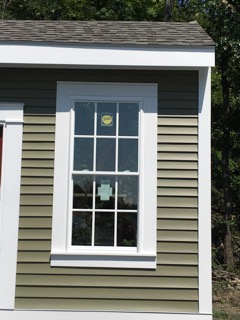
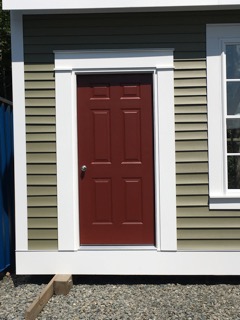
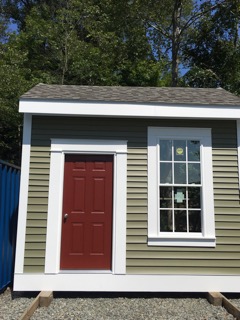
One of the changes currently proposed by Tuxedo Farm’s is a change in approved construction materials to include, among other things, the use of Vinyl Siding.
The Developer created a “mock-up” using some materials that have been proposed, and this is on display at their property, located where the Applewood Kennels once stood.
Residents are encouraged to take a look prior to the Public Hearing on September 25, where they will have the opportunity to voice their opinions on this proposed change to the Town Board.
For those residents who are unable to visit the site, below are photographs of the mock-up.
Public Hearing on Changes to Phase One of The Tuxedo Farms Project To Be Held September 25, 2017
Notice is hereby given that the Town Board of the Town of Tuxedo will hold a Public Hearing to consider the application of Tuxedo Farms for modifications to the Tuxedo Farms special permit on Monday September 25, 2017 at the Tuxedo Town Hall, Community Room at 7:00 p.m.
The Town will make every effort to assure that the hearing is accessible to persons with disabilities. Anyone requiring special assistance and/or reasonable accommodations should contact the Town Clerk.
Tuxedo Farms has begun the clearing process for their development. This process involves drilling and blasting services to facilitate rock excavations. Silver Valley D & B have been retained to provide these services. Silver Valley has all necessary federal and state licenses and permits to conduct blasting operations, and they are utilizing highly skilled and experienced licensed blasters to execute the work. There is a blasting protocol in place that was prepared with the assistance of the Town of Tuxedo’s engineers that describes the required notifications, hours of operations when blasting is allowed, and the vibration and noise level thresholds. The purpose of this protocol is to insure that all blasting operations limit, to the greatest extent possible, the impact and inconvenience to our residents.
The blasting is seismically monitored through the use of seismographs which have been installed at various locations throughout the perimeter of the project to confirm the blast induced ground vibration levels are within regulatory limits, and therefore not capable of having an adverse effect on any neighboring structures. Additionally, the Building Inspector, the Town’s Engineers, the Police and Fire Departments receive notifications prior to east blast as well as blast reports after each blast in order to monitor the blasting operations.
While a specific blasting schedule is not available due to various factors that affect the blasting, you can expect approximately 2 blasts per week which will generally take place mid-day.
The signals prior to and following each blast are being sounded as follows:
2 long horn blast = 2 minutes to blast
1 long horn blast = 1 minute to blast
2 short horn blasts = all clear
It is entirely possible that given the distance between the blast locations and the neighboring population that the horn signals may not be heard in town.
In the event you have any questions regarding the blasting or if you think you may have experienced an adverse effect. Please contact Vibra-Tech Engineers, Inc. at (800) 233-6181.
The Related Companies have announced their plan to change the name of their development from Tuxedo Reserve to Tuxedo Farms. The reason for the change is they feel the new name is more marketable. They will be coming before the Planning Board in the near future for review.
Sloatsburg Planning Board Discusses Tuxedo Reserve January 17, 2012
The Sloatsburg Planning Board met on Tuesday, January 17, 2012 at 7:30 pm with Tuxedo Reserve on their agenda.
Despite having indicated last month that they might hold a public hearing on the Related Company’s application for a private access road, they announced that they did not see the need for a hearing. The only changes to the plan are updates in the stormwater management which have been mandated by changes in DEC regulations. A Planning Board member inquired about the entrance to Tuxedo Reserve which will be located on Eagle Valley Road and was assured that it remains the same as what has been approved in 2005. Several audience members wanted to make statements, however the Board voted unanimously to give final approval to the project without permitting any public comment.
Sloatsburg Planning Board To Keep Tuxedo Reserve Hearing Open
December, 2011
The Sloatsburg Planning Board met on Wednesday, December 15, 2011 with the Tuxedo Reserve Development on their agenda.. In 2005, as Lead Agency this Board had approved the site plan for a private access roadlocated in Sloatsburg in 2005. Tuxedo Reserve has submitted a new revised site plan, which now includes 4 additional stormwater retention basins and a culvert drain under Route 17. The proposed changes are the result of the DEC having changed stormwater requirements twice since this plan was last approved. The Board indicated they were contemplating holding a public hearing on this plan since the public hasn’t had a chance to comment on it since 2005. Andrew Dance of Related Companies, argued that since this wasn’t an application or a proposed amendment, no public hearing was necessary or even appropriate. The Board, however, firmly stated that they would need time to consider both the possibility of a public hearing and the project itself. The discussion was adjourned to the January meeting of the Board.
The Tuxedo Town Board is well along with their review of Tuxedo Reserve’s application for an Amendment to their Special Permit of 2004. This amendment asks for sweeping changes to the Special Permit that was negotiated over many years by the prior Town Board. Some of the changes seek to unravel agreements the prior Town Board thought important, including limiting multifamily units to 305, banning construction within the Tuxedo and Mountain Lakes water sheds on environmental grounds and limiting retail space within the development in order to protect Hamlet businesses. The amendment calls for a 41% increase in multifamily units, including condominiums and rentals, over a thousand percent increase in retail space, and construction of houses within both the Tuxedo and Mountain Lake water sheds. The Town Board has conducted a series of workshops, but the developer has influenced the direction of the discussion. Town Board members have asked questions and are engaged, but can be deflected by the developer. For instance, Supervisor Dolan wanted to explore phasing of the development, so that if all the developer’s fiscal predictions don’t come true, the town has a chance to renegotiate certain aspects of the project. The developer’s representative objected and the town’s attorney for the Tuxedo Reserve project, after looking at the developer’s representative said “that would be difficult” and the matter was dropped.
There are many issues of concern to our town’s residents that have not been satisfactorily addressed. Of particular concern is the fiscal impact of the development on the town’s taxpayers. Time after time, at public hearings last fall, town residents, who had little faith in a prior fiscal analysis, that the developer guided, asked the town board to conduct a fiscal analysis independent of the developer. An independent fiscal analysis was promised on a number of occasions by the Town’s supervisor. But the analysis that was performed, was again heavily influenced by the developer. The developer provided the data for the analysis and the developer’s consultant did the computer runs. The town’s consultants did not thoroughly check the validity of the information that was provided by the developer for, if they had done so, they would have realized that the average square footage of housing units was larger than it had been in the prior analysis. This increase helped move the outcome into positive territory. Without a believable fiscal analysis, the board can’t make sensible decisions on issues that may be advantageous or disadvantageous for town taxpayers.
The Town Board is in a very strong position--they don’t have to agree to amend the Special Permit. The developer has a Permit to build…….so let them build. The developer wants changes, so the town should negotiate something from the developer in return. This development has many potential costs to the Town: equipment for the fire district, the ambulance corps, space for the library, costs to the highway department etc. These potential costs need to be analyzed carefully.
In recent months, the town board has received perplexing advice from their attorney that is not conducive to communication between residents and the board. The board has been advised not to answer any questions about Tuxedo Reserve raised by town residents. For example, at a summer meeting of the town board, I started to ask a series of questions that I thought the board should consider. I was stopped by the town Supervisor before I finished and told to submit the questions in writing. The board would then ask for answers from their consultants that would then be relayed to me. I did as I was asked, but never received any answers. At a subsequent town board meeting, I asked if my questions had been submitted to the consultants. I was informed that they had been and town board members had discussed the answers but I would not be told what the answers were nor what Town Board members thought about specific issues.
Those of us who have regularly attended Town Board meetings and work shops are concerned about the removal of these minimal rights of communication with the Town Board. We want the board to negotiate a deal for the town that is fiscally positive and we have repeatedly made this point. We believe the Town Board also wants this but their task is large and they need encouragement from their constituents. Please contact your Town Board representatives and encourage them to do a credible fiscal analysis and from it negotiate a deal that will not be an expense to the town’s current taxpayers. Supervisor Dolan has said there will not be another Public Hearing before the board votes on the Amendment so contacting your town representatives or speaking at a Town Board meeting are the only options open to you.
Secret Password is .............................................sunshine
Emails and Videos below regarding the 9.27.10 "site visit" to Robbinsville, New Jersey.
Emails below show refusal by Town Board & Town Attorney to provide location, time, and meetings with real estate developer, Sharbell Building Company, and Mayor of Robbinsville, Tim McGuff.
Emails below show the Tuxedo Town Board stating that no meetings will take place, despite video below showing that 2 meetings occurred at which the public was denied attendance, and not informed properly according to New York State Sunshine Laws.
Video below shows a Tuxedo Town Board breakfast meeting taking place at the Hampton Inn in Princeton, NJ, at 8:30 am on 9.27.2010.
Video below shows Town Board members are asked if they have any meeting scheduled later that day. They are also asked the time and location of any meetings to be held later that day. Town Supervisor, Peter Dolan, looks at the camera and states that no Town Board meetings will be held that day.
Video below from the offices of Sharbell Building Company in Robbinsville, NJ.The video shows Mark Cannuli from Sharbell leaving a meeting with all 5 members of the Tuxedo Town Board and 1 Tuxedo Town Planner.
Video below from the offices of Sharbell also shows the Mayor of Robbinsville, NJ, entering the meeting with all 5 members of the Tuxedo Town Board and Town Planner.
Town Board / Tuxedo Reserve Workshop Meeting September 23, 2010
The Town Board held a workshop meeting on Thursday, September 23, 2010 at 8: 00 am. Present were Supervisor Peter Dolan and Town Council members Cliff Loncar and Gary Phelps as well as Town Consultants Bonnie Franson, Larry Wolinsky and Jeff Marsden. Present for the applicant Tuxedo Reserve were Project Manager Andrew Dance and Attorney Steven Barshoff.
The purpose of the meeting was to continue the discussion regarding the Smart Code. Town Planner Franson had circulated a memo, which enumerated her comments on the subject, and Board members took this opportunity to ask questions based on the memo. The following issues were disucssued:
Consideration of which provisions within the Smart Code should be modified by Waiver versus which should be prohibited from being waived.
Accurately calculating Gross Floor and whether or not attics and basements should be included in this calculation.
Parking
The following were also discussed:
Performance Standards (These cover Stormwater management, grading and steep slope protection, road standards, sanitary sewer, water supply, soil erosion and sediment control, tree surveys as well as water quality testing.) It was agreed that prior to the issuance of the first building permit, the developer must submit and Environmental Compliance Document to the Town Code Enforcement Officer for his review and approval.
Design Guidelines
At the conclusion of the meeting, Mr. Wolinsky stated that the Board has completed their initial review of the DFEIS document. The applicant must now submit a new version incorporating points raised at the workshop discussions. This should be ready by next week.
Town Board / Tuxedo Reserve Workshop Meeting September 13, 2010
The Town Board held a workshop meeting on Monday, September 13, 2010 at 6:00 pm. Present were Supervisor Peter Dolan and Town Council members Lisa Spivak, Gary Phelps, Tom Darling and Cliff Loncar as well as Town Consultants Bonnie Franson, Larry Wolinsky and Jeff Marsden. Present for Tuxedo Reserve were Project Manager Andrew Dance and Attorney Steven Barshoff.
The subject matter for this meeting was the Smart Code, and much of the discussion focused on waivers. Mr. Wolinsky stated that he is not 100% satisfied with the language about waivers in the DFEIS and is working with the applicant to correct this. In his view, waivers are not unusual occurrences but are intended to deal with limited circumstances in design and construction. They should be for an isolated and limiting experience and are not intended to solve a design problem that should have been discovered earlier on. He further stated that the Tuxedo Reserve project as proposed has not been heavily engineered in advance and the resulting risk of this must be born by the applicant, not the Town. Discussion centered on who would ultimately make decisions on waivers. Ms. Franson sated that what goes back to the Town Board and what goes to the Zoning Board of Appeals is not clear in the document. The Town Board feels that the Zoning Board might not be familiar enough with the project to issue waivers. Mr. Wolinsky reiterated that they need to expand the waiver language and then bring the document back to the Town Board.
There was also a discussion about recreation fees. Under the present Town Code (PID law) the recreation fee is $1500 per residential unit, payable when the building permit is issued. Mr. Dance stated that Related might have access to property either adjacent to or near the project that would be suitable for active Town recreation and he requested that there be some provision to donate this land and then deduct it’s worth from the recreation fees. The Town will consider this request.
There was a short discussion regarding Construction, which centered mostly on catchment areas in the project, which will all be located in the right of way, not on individual lots. Phasing still needs to be discussed.
On September 27th, the Board and its consultants plan to take a field trip to Washington Township, Mercer County, NJ., where there is an existing development operating under a Smart Code. They will drive down the night before, meet with the Township Officials first thing in the morning and return home in the afternoon.
There will be another workshop session focusing on the smart code on September 23rd at 6 pm.
Town Board / Tuxedo Reserve Workshop Meeting September 9, 2010
Board members present: Peter Dolan, supervisor and councilpersons Cliff Longcar, Gary Phelps, Lisa Spivak and Tom Darling
Town Consultants: Bonnie Franson, Jeff Marsden and Bill Parry
Tuxedo Reserve representatives: Steve Barshoff and Andrew Dance
Meeting started: 5:45
Jeff Marsden, the Town engineer, began the workshop by explaining that the Ramapo River is classified as a 4th order stream and as such no direct storm water discharge into the river is allowed under current New York State regulations.
He went on to explain that Tuxedo Reserve’s storm water treatment plan has two phases, one for storm water treatment during construction and the second for post construction storm water treatment.
During construction, temporary sediment basins and possibly other structures, will be built to capture sediment entrained by storm water flow over disturbed land. Silt fences, he pointed out, are usually not useful. These basins need to be regularly cleaned of sediment to provide room for material moved by subsequent storms. During the clearing and blasting phase, a limited amount of land will be disturbed, the loose rock generated will be moved to a processing plant where it will be crushed to a small grain size, returned to the site and applied to the blasted land surface as a layer several feet thick. Protocols have been established for the mitigation of spills (e.g. fuel) during construction. In steep areas hillside berms may be built to prevent severe erosion.
The storm water treatment plan (SWTP) for post construction has two objectives, water quality treatment during normal rain events and attenuation and detention of run off during severe rain events.
1. During normal rain events, runoff will be diverted into swales and rain gardens within road right of ways, where pollutants will be removed and the residual water allowed to infiltrate the ground. There followed considerable discussion about the maintenance rain gardens and swales needed and who would be responsible.
2. During severe storm events storm water will bypass rain gardens and swales and be directed though a series of attenuation basins to a large detention basin in Sloatsburg. This large detention basin will slowly release water to the Ramapo River. Again the question of maintenance was raised and it was pointed out that the Tuxedo Reserve Home Owners Association would be responsible for the maintenance of the storm water management system.
Drainage in the Mountain Lake and Tuxedo Lake watersheds
\Mr. Marsden said that because of the new plan for development in the Mountain Lake area no water from roads, driveways or roofs would find its way into Mountain Lake. The drainage for this part of the development would be to the south.
Similarly in the Tuxedo Lake water shed, the drainage from all houses, driveways and roads will flow away from Tuxedo Lake, however, the drainage from some yards will be toward the Lake. Consequently special care must to be taken, during construction, when these areas are disturbed. Mr. Marsden promised that there would be no increased water flow to Tuxedo Lake, caused by this development, even during a 150-year storm event.
A question was asked about possible pollution of the well system that will supply water to the development. Mr. Parry stated that pollution is always possible but the testing program indicated that most of the wells were not hydraulically connected, so if a well is contaminated it could be shut down and supply could come from other wells, until the problem was alleviated.
The reliability of the water supply was questioned. Mr. Parry pointed out pump test results are extrapolated after pumping was stopped, this is a usual procedure he pointed out, but it does not take into account possible recharge occurring during the test. [It should be noted that the well tests occurred in late March and early April, a time when the water table is at its highest and significant recharge is occurring. At the time of the test snow on the ground was melting and rain occurred during the test JDH].
“Adverse Impacts”
The objective of the storm water maintenance plan is to mitigate any adverse impacts of development. Consequently the Planning Board has recommended that a testing protocol be developed that will measure before, during and after construction, the concentration of solids, phosphate, nitrate and chloride in streams within and around the Tuxedo Reserve development,. The establishment of a pre-development base line by this testing program will allow adverse impacts to be detected and corrected.
Mr. Marsden emphasized that this Hydrology plan is preliminary and more engineering work will be needed after final site plans have been developed.
Agenda for Town Board/Tuxedo Reserve Workshop Meeting Sept. 13, 2010
Call to Order
Pledge of Allegiance
Workshop Session to review and discuss the “Smart Code” development criteria proposed for the Tuxedo Reserve Development and, if time permits, Section 3.7 (Construction Impacts) of the Draft Final Supplemental Environmental Impact Statement Prepared for Tuxedo Reserve Development 3rd Amendment to Special Permit
Regular Meeting
Moment of Silence to Honor Memory of Kevin McDevitt
Minutes
Monthly Reports
Public Comments on Agenda Items
1. Town Supervisor/Town Board Update
2. Resolution to Authorize Agreement to Perform Snow & Ice Control on County Roads
3. Reminder of Family Fun Day at Murphy Field - October 9, 2010 (Rain Date October 10, 2010)
4. Any other business as may come before the Board after this Agenda is posted
Public Comments
Budget Transfers
Vouchers
Executive Session for the purpose of discussing personnel salary matters
Town Board / Tuxedo Reserve Workshop Meeting Sept. 2, 2010
The Town Board held a workshop meeting on Thursday, September 2, 2010 at 5:30 pm. Present were Supervisor Peter Dolan, Town Board members Gary Phelps, Tom Darling and Cliff Loncar as well as Town Consultants Bonnie Franson, Larry Wolnksy and Jeff Marsden. Present for Tuxedo Reserve were Project Manager Andrew Dance and Attorney Steve Barshoff.
The main subject of the meeting was the proposed Smart Code. Mr. Dance lead off the discussion by giving a brief history of the Smart Code. As he explained it, the Town of Tuxedo’s PID law requires a set of design standards for the project and the present Smart Code grew out of that requirement.
Town Planner Bonnie Franson suggested that the Town Board revisit the memo sent to them by the Planning Board when they officially turned overt the application so that “open items” can be addressed at this time.The ensuing discussion covered all different aspects of the Smart Code including but not exclusively:
The requirements for the Tuxedo Park Library
wetlands
Distinguishing between a “waiver” and “interpretation”
The role of the Planning Board as the project is built out
Minimal lot size and how is that determined
Determining gross floor area
Vehicular parking standards
Driveway slopes
The preservation of trees and what constitutes a “specimen” tree
The width of alleys
The meeting was adjourned at approximately 8 pm. The Board feels more discussion will be necessary with regard to the Smart Code. There is a workshop scheduled for September 9.(the subject is Hydrology and Stormwater Management) and the Board will continue the discussion of the Smart Code at the conclusion of that meeting.
Agenda for Town Board/Tuxedo Reserve Workshop Meeting Sept. 9, 2010
Call to Order
Pledge of Allegiance
Workshop Meeting to Review and Discuss Section 3.6 (Hydrology) through Section 3.12 (Growth-Inducing Aspects of Modification) of the Draft Final Supplemental Environmental Impact Statement Prepared for Tuxedo Reserve Development 3rd Amendment to Special Permit
Any other business as may come before the Board after this Agenda is posted
Town Board / Tuxedo Reserve Workshop Meeting August 9, 2010
The Town Board held a workshop meeting on Monday, August 9, 2010 at 6 pm. Present were Supervisor Peter Dolan, Town Board members Lisa Spivak, Gary Phelps, Cliff Loncar and Tom Darling as well as Town consultants Bonnie Franson and Larry Wolinsky. Also present were Bruce Murray and Patty Liddel of RES Group, the Town’s Consultant for Fiscal Analysis.
Mr. Murray and Ms. Liddel explained that they had not done an independent review of the Tuxedo Reserve project because they weren’t asked to do one. Instead they were asked to review the original fiscal impact reports and supplemental reports all of which were provided by the Related Company. In doing their review, the consultants recreated the model that had been used in the Special Permit of 2004. They did not “accept” anything--they input numbers obtained from Related and ran the model for themselves.
The discussion encompassed many facets of the fiscal impact of the project including valuation of the property, impacts on the school district, impacts on Town services i.e. ambulance, fire, police, highway, as well as the amount of age restricted housing and the phasing of the project.
The next workshop meeting will be held on September 2 at 5:30 pm. Its focus will be the Smart Code and Design Guidelines. An additional workshop will take place on September 9 and the subjects for that session will be Section 3.6 Hydrology through Section 3.12- Growth Inducing Aspects of Modification.
Town Board / Tuxedo Reserve Workshop Meeting August 5, 2010
The Town Board held a workshop meeting on Thursday, August 5,2010 at 5 p.m. Present were Peter Dolan, Town Supervisor, Lisa Spivak and Gary Phelps, Councilpeople as well as consultants Bonnie Franson, Larry Wolinsky, Jeff Marsden and Mr. Marsden’s colleague, hydro geologist, Bill Parry. Present for Tuxedo Reserve, but arriving late because of a misunderstanding of meeting start time, were Attorney Steven Barshov, Project Manager Andrew Dance, Engineer David Getz of Lehman & Getz, and Naturalist Laura Newgard of EcolSciences, Inc.
The agenda for this session was to continue review and discussion of Section 3.4 (Archaeology) and Section 3.5 (Natural Resources) of the Draft Final Supplemental Environmental Impact Statement Prepared for Tuxedo Reserve Development 3rd Amendment to Special Permit. The meeting started before any representatives for Tuxedo Reserve had arrived. Mr. Dance displayed a revised plan for Related’s development near Mountain Lake which removed lots in close proximity to the wetlands, reduced the number of lots in the Mountain Lake area from forty-eight to twenty-three, increased lots in the Winding Hill area, and eliminated two under-the-road culverts for wildlife. The proposed mix of housing would remain the same. Consultant Marsden expressed concern about the the proposed changes resulting in only one emergency access road. Related and Lehman & Getz will explore the possibility of an 1100 foot “boulevard”-type section of road being installed despite steep slopes.
Subject to further review by the Town consultants and any agencies requiring action, the discussion on archaeology and natural resources was deemed completed.
The following workshops were scheduled: Monday, August 9, 6 PM to discuss the fiscal analysis; Thursday, September 2, 5 PM – Hydrology/Stormwater Management, Alternatives, Mitigation, Unavoidable Significant & Adverse Impacts, Irreversible & Irretrievable Commitment of Resources and Growth-inducing Aspects of the Proposed Modifications; Thursday, September 9, 5 PM to review and discuss the Smart Code and any remaining other sections of the draft not already reviewed.
Agenda for Town Board/Tuxedo Reserve Workshop Meeting August 9, 2010
Call to Order
Pledge of Allegiance
Workshop Meeting to Review and Discuss Appendix D: Economic and Fiscal Analysis of the Draft Final Supplemental Environmental Impact Statement Prepared for Tuxedo Reserve Development 3rd Amendment to Special Permit
Any other business as may come before the Board after this Agenda is posted
Agenda for Town Board/Tuxedo Reserve Workshop Meeting August 5, 2010
Call to Order
Pledge of Allegiance
Workshop Meeting to Continue Review and Discussion of Section 3.4 (Archaeology) and Section 3.5 (Natural Resources) of the Draft Final Supplemental Environmental Impact Statement Prepared for Tuxedo Reserve Development 3rd Amendment to Special Permit
Any other business as may come before the Board after this Agenda is posted
Town Board / Tuxedo Reserve Workshop Meeting July 29, 2010
The Town Board held a workshop meeting on Thursday, July 29,2010 at 5 pm. Present were the entire Town Board as well as consultants Bonnie Franson, Larry Wolinsky and Jeff Marsden. Present for Tuxedo Reserve were Attorney Steven Barshoff and Project Manager Andrew Dance.
The agenda for this session was section 3.4 (Archaeology) and section 3.5 (Natural Resources) of the DFSEIS. The discussion of archaeology centered around some rock shelters which are present on the site. On July 27th, the Town received a memo from Douglas Mackey of the New York State Office of Parks and Recreation (SHPO) stating the concern of that office over the rock shelters. Therefore, it has been decided to study these shelters further. The memo also addressed some concerns about a corduroy road portion of what might be part of the Continental Road on the site. There will also be some additional study of this. Attorney Wolinsky stated that if it is the Continental Road, there will need to be an additional level of investigation.
The discussion on Natural Resources centered on the Mountain Lake are of the cevelopment. The Town Board expressed their desire to see a change in the plan for this development with fewer houses and the remaining lots moved. Andrew Dance stated that Related can and will have a new plan ready for study at the next scheduled Workshop which will be held on Thursday, August 5th at 6 pm.
The following dates have been set for workshop sessions on the DFSEIS for Tuxedo Reserve:
Thursday, July 29 at 5 pm: Section 3.4 – Archaeology (sp) and Section 3.5 – Natural Resources
Thursday, August 5 at 6 pm: Section 3.6 – Hydrology and Storm water Management and Section 3.7- Construction Impacts
Monday, August 9th At 6 pm: Section 3.3 Economic and Fiscal Analysis
A workshop on the Smart Code will be held sometime in the week of September 2nd.
TPFYI would like to suggest to all those people who made statements at the public hearings, go to the Town Website and look at Appendix C in which all comments have been summarized and addressed. Check to see that your statement is summarized properly and that you are satisfied with the answers! This could be your last chance to comment.
Town Board Tuxedo Reserve Workshop Meeting July 8, 2010
The Town Board held a workshop meeting on Thursday, July 8, 2010 at 6 pm. Present were Supervisor Dolan and Councilpersons Phelps and Sprivak as well as Attorney Larry Wolinsky, Planner Bonnie Franson and Engineer Jeff Marsden. Attending for Tuxedo Reserve were Project Manager Andrew Dance and Attorney Steven Barshoff.
The discussion centered on the DFSEIS sections 3.1 (Comments and Responses, Description of the Proposed Modifications) and 3.2 (Comments and Responses, Land Use, Zoning and Public Policy).
During the review, the following points were raised by the Supervisor:
Reduction of units at Mountain Lake from 40 to 20
Opening Eagle Valley Road as a corridor
Possibly increasing the commercial space from 30,000 to 45,000 square feet
Converting the Village buffer (or ìgreen donutî) into Town walking trails so that the residents of the development will be able to reach the Hamlet.
He also expressed his support for the new mix of housing with its increase in the number of multi-family units and stated that he would like the Fox Hill tract to be deeded to the Town so he can build a Town Pool on this site. Currently, the Fox Hill tract is to remain as Open Space in perpetuity.
Attorney Wolinsky counseled that the Town needs to let the applicant know their thoughts and to hear the applicants arguments for and against these proposed changes.
The date for the next workshop is yet to be set. The subject will be Section 3.4 of the Comments and Responses – Archaeological Resources and Section 3.5 Natural Resources. Section 3.3óEconomic and Fiscal Analysis will be the subject of a future workshop after the Board has had the opportunity to meet with its consultants, RES Group.
Rockland County Sewer District Turns Down Tuxedo Reserve
On April 22, 2010 the Tuxedo Reserve Development was on the agenda at the Rockland County Sewer District meeting. Developers are looking for permission to tie the housing development into the Rockland County system via the new facility located in Hillburn, NY.
The developer was not present at the meeting, however representative from the Tuxedo Land Trust were there and ready to speak out against the proposed connection.
Town of Ramapo Supervisor Christopher St. Lawrence put a swift end to the request before anyone could speak by commenting “people in Orange County and Tuxedo need to know that the system that we built here in Rockland County is for Rockland County residents only. We are not spending this money to give an enhancement to anyone in Orange County, nor are we hooking up our system to Orange County.”
The development will not be able to hook into the Tuxedo Sewer plant as per a DEC mandated moratorium, issued in January of 2010.
This leaves the developer with quite a problem on their hands, which, unless rectified, will prevent them with moving forward with the project as approved.
Public Workshop on Tuxedo Reserve's Smart Code January 11, 2009
At the January 11 Town of Tuxedo Board Meeting, the Tuxedo Reserve developers brought consultants from Cooper Robertson to conduct a workshop on their proposed “Smart Code”. This code would be developed by Cooper Robertson and customized for Tuxedo Reserve. As presented, the Smart Code would specify all architectural, site planning and landscape choices for buildings in the development.
According to Tuxedo Reserve’s attorney, Steven Barshoff , this code would not override local, state and federal codes. Mr. Barshoff referenced the PID law adopted by the Town of Tuxedo, which established a zoning code to govern developments. Zoning details were included in the Special Permit of 2004 for Tuxedo Reserve. That preliminary plan established locations for different lot types, design guidelines and bulk standards.
When Tuxedo Reserve received approval for the first phase of their development, called Northridge, the developer realized that the bulk standards in their Special Permit would work only on flat land.
Paul Milana from Cooper Robertson spoke about the difference between the “Smart Code” (SC) and conventional zoning codes. The SC examines different “Use and Density” environments and establishes appropriate numbers of units per acre. According to Mr. Milana, the SC guides communities to build a more predictably better place. The SC considers roads to be more than just conduits but also public spaces for walking, biking, etc. To illustrate the SC plan, the consultants use a transect-based zoning theory. Natural habitats are symbiotic and apply to human habitats. They consider 6 zones ranging from rural to urban and they organize typical elements of each transect that are public, private and civic.
T1 – Natural
T2 – Rural, agricultural
T3 – Sub-urban, detached single family residential
T4 – General urban, apartments, corner store, etc.
T5 – Urban center – main street
T6 – Urban core – civic center
Different districts are also included for airports, industrial complexes, water treatment facilities, etc.
The consultants customize the Smart Code to local character. They analyze site maps and develop T-zones according to the regulating plan. They ensure that the SC is consistent with state and local statutes and that the design guidelines are consistent with local zoning and permits.
In each transect zone the SC looks at thoroughfares (what is allowed on both sides of the street) and frontages ( regulates how buildings meet public space. The SC establishes specifics for setbacks and types of frontages.)
Theresa Coolahan from Cooper Robertson explained how the SC would be customized for Tuxedo Reserve. In the development there would be zones T1, T3, T4 and T5. There would be different lot types: Village; Adirondack,; Hillside, etc. For example, in the Adirondack lots, there would be 95’ minimum lot width and 18% maximum lot coverage. The SC establishes checklists for each type of lot. The lots are defined in the regulating plan. The checklist specifies building height, lot coverage, setbacks, outbuildings and building placement. More architectural details were added than were in the 2004 Special Permit.
The public question and answer period followed the presentation.
Andy Rogers observed that the applicant gets certainty with the SC but there is a need for consistent standards and certainty for the Town boards.
Chiu-Yin Hempel expressed her concern with slope issues on lots with over 20% slope.
Jo Ann Hanson commented that the pictures shown depict flat terrain with trees. She wondered how the developer proposes to achieve that. Andrew Dance replied that only one of the pictures was actually flat.
Larry Darby noted that the overarching document is the Special Permit not the Smart Code. He also commented that under the SC, the Planning Board has broad discretion and is able to authorize variances. Steven Barshoff added that there is no variance process as the Special Permit gives authority to the Planning Board to modify the plan so variances are not needed.
Frank Peverly, Chairman of the Town Zoning Board, questioned the Smart Code’s assignment of responsibility for interpretation to the Town Planning Board. He stated that since the Smart Code is actually creation of zoning regulation, the Town Board should be looking forward to what happens when the developer leaves. The issuance of relief for reasons unknown nor contemplated does not exist. It is his belief that the Town’s Zoning Board should be involved in the process as stipulated in State’s Town and General Municipal Law.
Jim Hays noted that in the 2004 Special Permit, the name of Robert A.M. Stern was liberally used, but now it seems to have been replaced with statistics. He expressed “grave doubts” that Tuxedo Reserve will actually look like the pictures which the developer and its consultants have shown. He noted that wildlife corridors have been obstructed and areas around wetlands developed. In fact, if you look at the plans, it is sprawl. Paul Milano of Cooper Robertson responded that Robert Sterns office has been involved in the creation of all of the plans. He stated that the revisions to the “master plan of Tuxedo Reserve” were presented to Robert Stern. Supervisor Dolan remarked that what he wants for the Town is “what’s in those pictures,” and he feels that the Smart Code represents how the Town will get exactly what they’ve been promised. Mr. Hays responded that he feels there is “too much wiggle room” for the developer.
Peter Regna commented that the transect zones which make up the Smart Code make T3 the “most desirable” kind of housing, even dubbing it the “American dream.” If that is so, why is the developer now seeking fewer of these kinds of homes and increasing the multi-family dwellings. He noted that all the “bad examples” in the presentation had been multi-family housing. Paul Milano responded that the proposed shift in housing is due to the active adult units and the belief that multi family housig would be more attractive to this group.
Jurgen Wekerle asked what, if anything, could prevent a new village with it’s own zoning from being developed on this property. Steven Barshoff replied that while this was theoretically possible, he couldn’t think of any reason why Related would want to do that. When it was pointed out that this scenario might come into play if the property were sold to the residents of Kiryas Joal, Mr. Barshoff responded that the “model didn’t fit” because the price point is too high and there aren’t enough bedrooms.
Patsy Wooters commented that the addition of alleys to the community adds impervious surface to the plan and impacts the storm-water of the project. Andrew Dance replied that alleys take the place of driveways and thus there is no additional impervious surface.
Steve Gross inquired if the Smart Code h ad been “calibrated for Tuxedo,” how were history, geology and botony considered and incorporated into the SC?
JoAnn Hanson requested that the Town Board have the Town Engineers look at the performance standards. She wondered how the Board could maintain for the future the right to modify the Smart Code. If it is put into the Permit (as an amendment) is it there for the life of the development?
Detailed Account of the November 23 Public Hearing for Tuxedo Reserve
Because non-Tuxedo residents were heard at the end of the previous public hearing, Supervisor Dolan announced that the Board would hear them first.
Robert J. Drennen: Click here to read Mr. Dennen’s remarks
James (“Spider”) Barbour: Click here to read Mr. Barbieri’s remarks
Peggy Wissler: Click here to read Ms. Wissler’s remarks. Download the map here.
Steve Gross: Click here to read Mr. Gross’s remarks
Mary Ellen Shaw representing the Sierra Club of New Jersey, stated that the Club is concerned about stormwater runoff, additional impervious surfaces and the actual flow levels in the Ramapo River. She commented , “the more development you have up here, the less flow we have in New Jersey.” She then informed the Board that In New Jersey, they call this kind of development “uncontrolled sprawl,” and they argue over every acre.
Janet Burnet: spoke as the Executive Director of the Ramapo River Intermunicipal Watershed Committee. She began by showing a map of the watershed, which reaches all the way down to the New York State border and into northern New Jersey. She pointed out that this is a shared watershed and it’s where many people, including many non-Tuxedo residents, get their drinking water from. The Committee has multiple concerns about water quantity as well as water quality. Rockland County gets 40% of their drinking water from the watershed and United Water has recently stated that this is not enough to satisfy the demand for water. This is the same watershed from which Tuxedo Reserve is proposing to withdraw up to 800,000 gallons a day! The Committee is asking for better regional planning—transboundary planning. They feel that Rockland County has not been included in the process.With regard to the quality of the water, the developer has intimated that there is a possibility that they will hook into the Western Ramapo sewage treatment plant, however, this will not happen. The Rockland legislature has said they will not give permission for the hook-up as has the Rockland County Sewer District #1. Ms.Burnet also remarked that she has not seen any plans for a new sewer treatment plant in Tuxedo, but if they have been drawn up, she recommends an independent review of them by an expert in the field before the issuance of any permit. She concluded by noting that when a decision making process takes as long as this one has with the factors needing to be reviewed over and over again, one has to suspect that the project just isn’t a good idea! Good decisions are often clear and easy to make. Perhaps it is just time to say no!
Howard Horowitz: a resident of Warwick.and a Professor at Ramapo College. He pointed out that the issue of Tuxedo Reserve affects the entire region (and not just the Town of Tuxedo) in many ways. The property is part of the open corridor for wildlife, which also includes Sterling Forest. Once corridors such as this one are gone, they are gone forevert and so people have been fighting to maintain them as much as possible. Rock-blasted steep slopes, fractures in the bedrock and chemicals from lawns will all contribute to contamination of the water. In his view, this is a place for which the highest and best use is to be kept open.
Next, the following Tuxedo residents spoke:
David du Pont: Click here to read Mr. Du Pont’s remarks
Gardiner Hempel: As President of the Tuxedo Park Fire Department and a Fire Commissioner for the Town of Tuxedo, Mr. Hempel read a letter written to the Board by the Commissioners. Click here to read that letter.
Lili Neuhauser: Click here to read Mrs. Neuhauser’s remarks
Sally Spooner: stated that as presented, the Tuxedo Reserve development will require substantial taxpayer dollars from residents who are not part of the development in order to sustain itself. The Tuxedo Park Library will require additional infrastructure to seve the population generated by the project. This could run into millions of dollars.. The cost of land, the building, additional furniture and equipoment will be borne by the taxpayers …not the applicant. Ms. Spooner asked the Board to:
Hire a professional to represent the Town’s interest I conducting a fiscal analysis. This should include the true cost of things like the Library as well as Fire Protection.
Protect their constituents from unfair burdens by making sure the applicant pays for the additional services generated by the project. She said it’s fine for the applicant to make money, but not at our expense.
Barbara du Pont: spoke as President of the Board of the Tuxedo Park Library. Click here to read Mrs. Du Pont’s remarks
Paul Bumbar, a 30-year resident of Laurel Ridge, added his voice to those who oppose the project. He is concerned about the development, especially in the Northern Tract, Mountain Lake and the Fox Hill Tract. He is also concerned about the segmentation of Sterling Forest. He expressed apprehension about the additional traffic that will be generated by the project saying that it is already difficult to get onto Route 17 during rush hour. Additionally, he feels the air quality as well as the water quality will be severely compromised.
Mary Graetzer: Click here to read Mrs. Graetzer’s remarks
John Yrizarry: spoke about the Mountain Lake area. He stated that according to the SDEIS there are 6 species of concern found in the vicinity of Mountain Lake and yet the document also states that the area is suitable for development and that the project would have a minimal impact on the wild life. In his view, there seem to be many flaws in the document. Making sense of these flaws will be up to the Board.
Alan Heywood: began his statement by chastising the Board for holding the hearing in the Town Hall. He suggested that since there were over 200 people at the last hearing with additional people who attempted to attend and couldn’t get in, scheduling this meeting for a venue as small as the Town Hall showed total disrespect by the Board. He pointed out that conceptually people had had a hard time imagining what Tuxedo Reserve will look like and suggested that we have a great example of what it might look like in the clearing of power-lines along South Gate Road. Finally, he commented that in his opinion Related will have a great deal of trouble in the present economic climate persuading any financial institution to loan them money to build a spec development in an unproved area of Orange County, NY. He urged the Board to pay great attention to the financing of the project lest the Town is left with a developer than runs out of financing.
Joan Alleman made a statement via a letter, which was read into the record by Jim Hays. Click here to read Mrs. Alleman’s lettter
Earl Stevens: Mr. Hays also relayed a message from Mr. Stevens who was celebrating his 104th birthday. He wanted the Board to consider that the Hudson Highlands are very important and Tuxedo is very important to the Highlands.
Jim Hays: expressed concern about the proposed Smart Code. He mentioned that some time ago Andrew Dance had offered to give a worksh0p on the Smart Code and said that he hoped the Town would arrange for such a workshop because he feels that the Board as well as other interested people in Town could benefit from it.
Larry Darby: Click here to read Mr. Darby’s remarks
Dena Steele: Click here to read Ms. Steele’s remarks
Francine Rauch: Click here to read Mrs. Rauch’s remarks
Tom Wilson: began by stating that the DSEIS admits there will be stormwater runoff into Tuxedo Lake and the Ramapo RiverIt also admits there will be runoff onto adjacent properties. However, the only method of control being proposed by the developer is a pocket pond and swale, which will bethe only thing preventing contamination going into our drinking water! Beside the issue of water contamination, there is also an issue with the sewage plant. The DEC is going to be sending a letter to the Town explaining that the existing sewage plant is not sufficient and changes need to be made. As the plan stands now, the Town will geta new sewer treatment plant after the 80th house is built. That’s not going to be sufficient for the DEC. The Town needs to have another plant. Even if the developer was willing to change the plan and provide a new plant at the beginning of construction, the Town has no guarantee that thie project is going to get built. An alternative plan is needed. Mr. Wilson then stated that as much as many Tuxedo residents have had problems with this developer, that he would like to prose a pubic/private partnership with him. He then proposed an idea where residents could work with the New York State Parks Departments and the Trust for Public Land and offer the developer money to buy the property outright. At current market values, that would be close to $39 million, (The developer would say that its worth far more than that – about $100 million and that he’s got about $50 million into it already.) Mr. Wilson suggested that a Biomass facility could be constructed and opened on the property. The Parks Department would be OK with this idea and money could generated as opposed to the contamination of public waters. A plan like this would generate between $20 million and $30 million per year and would be a way for the developer to earn his money back in 8 years instead of the 12-15 years needed for build out. Mr. Wilson then outlined more of his plans for this partnership. This information can be found on his website at http://tuxedolandtrust.org/
Peter Regna: Click here to read Mr. Regna’s remarks
Tom Bender: Mr. Bender sent a letter which was read into the record by Uli Pendl. Click here to read Mr. Bender’s letter
JoAnn Hanson: expressed her support for the workshop on the Smart Code. She mentioned that she has a degree in urban planning and yet is having a hard time understanding the changes as requested. She wondered how anyone could comment on the changes when they are so difficult to i understand. While she understands there are advantages for Related as it smoothes the process for them, she feels that the public and the Board need to understand the changes that are being proposed.
Allan Barnett: Click here to read Mr. Barnett’s remarks
John Kilduff: remarks forthcoming
Phillippe Seeman: Mr. Seeman sent a letter, which was read into the record by Uli Pendl. Click here to read Mr. Seeman’s letter
Kristia Cavere: Click here to read Ms. Cavere’s remarks
Nadia Cadadero: Click here to read Ms. Cadadero’s remarks
Lesley Devore: Click here to read Ms. Devore’s remarks
Keevie Silvay: Click here to read Mrs. Silvay’s remarks.
Patsy Wooters: stated that one issue that come up in the two public hearings was the welfare of the projected homeowners association. She gave the example of Pierson Lakes in Sloatsburg, Ny. The Pierson family tried to pull off a large development of 74 high-end homes, but it didn’t work out and in 2004, the project was sold to Byron Hill. Since then, Byron Hill has stiffed the Homeowners Association on their dues. They currently owe over a million dollars.They also have submitted annual offerings without notifying the homeowners, which is in violation of their agreements. Tuxedo Reserve is a development that depends on a successful Homeowners Association, but if Related sells it to someone else, there is no guarantee as to who that will be and how they will behave. This is something else to consider in a fiscal analysis.
TARGET has been busy over the summer and fall and we want to bring you up to date on these activities and provide a general appraisal of where the Tuxedo Reserve Development stands at this time.
In the spring of this year the Town of Tuxedo's Planning Board, after seven months of review, turned a proposed amendment to Tuxedo Reserve's Special Permit of 2004 back to the Town Board with a recommendation that a Draft Supplemental Environmental Impact Statement (DSEIS) be prepared. The Town Board was at first reluctant to ask for a DSEIS. We pressed them to have one prepared by an independent consultant because; 1.new areas are being proposed for developed, e.g. within the Tuxedo Lake and Mountain Lake water sheds, that could potentially affect wildlife as well as surface and ground water quality and flows, 2. a proposed change in housing mix could have an adverse fiscal impact on the Town and 3. an increase in impervious surfaces, of some 50 acres, will effect the hydrology of the site. In addition the previous FEIS had not required a cut and fill analysis that accurately and quantitatively defines the areas of disturbance, which are needed to calculate surface water run off changes. The Board agreed to do a DSEIS, prepared by the applicant and to include: construction impacts (cut and fill analysis), evaluation of impacts on the Tuxedo Lake and Mountain Lake water sheds, fiscal impacts and impacts related to Development phasing. When finished the DSEIS concluded there would be no adverse environmental or fiscal impacts of the proposed amendment.
TARGET disagreed with a number of aspects of this DSEIS including the fiscal analysis. We again urged the Board to conduct an independent fiscal analysis that makes reasonable estimates of development related expenses and revenues. This analysis should compare the tax impact of the 2004 permitted development with the requested amended development, with and without age restricted housing. Age restricted housing is over built and is not selling.
We are also concerned about the environmental impacts of development within the Mountain Lake and Tuxedo Lake water sheds and our consultant gave a number of presentations to the board and wrote them two long letters detailing our concerns about stormwater calculations, potential groundwater pollution and impacts to wildlife habitat.
We are urging a carefully engineered plan for storm water managementwithin the Tuxedo Lake water shed and the Village is demanding that the present quantity and quality of run off from the development to Tuxedo lake not be adversely affected even by major storms. This is important because the Village has just completed long and difficult negotiations with the New York Department of Environmental Conservation with respect to our dam and its ability to withstand severe storms without cresting waters rising above the top of the dam.
Changes to its watershed could adversely affect the hydrology of the lake.
The Town Board scheduled a public hearing on the proposed amendment for October 26. TARGET prepared a letter, sent to all residents of the Town of Tuxedo, that laid out the issues as we see them (letter attached). There was a very big turn-out with standing room only and many people being turned away. We estimate between 150 and 200 people attended and many spoke, all opposing the amendment and urging the Town Board to negotiate a better deal for the Town.
Detailed Account of October 26 Public Hearing on Tuxedo Reserve
Public Hearing on Tuxedo Reserve Proposed Special Permit Amendments, the Draft Supplemental Environmental Impact Statement (DSEIS) and Proposed Resoning held on October 26, 2009:
Supervisor Dolan opened the Public Hearing by reading the official procedures and rules of conduct for Public Hearings. Speakers were asked to confine their comments to the following subject matter:
the draft Supplemental Environmental Impact Statement for Tuxedo Reserve
a proposed revised Special permit for Tuxedo Reserve
a local law amending Local Law #4A of 1999 as relates to the minimum number of single family residential units required as part of Tuxedo Reserve and
a local law amending the zoning map within Tuxedo Reserve to accommodate the new plan as proposed.
and to keep their comments to 3-5 minutes with no deferrals of time to another person.. Comments from residents of Tuxedo were heard first. It was announced that the hearing would be stopped no later than 10 pm, and would be continued at a later date if there were still speakers to be heard.
Evelyn David spoke first and stated that her comments were in response to the recently received Target Tuxedo letter. She went on to state that that at a time when the world around us seems to be strengthening laws, Tuxedo is loosening theirs. Nowhere in the plans for Tuxedo Reserve can she find any mention of the words “Green” or “conservation” Why is Tuxedo in regressive mode? In her view, the Town should be enactting stricter zoning laws rather than loser ones that make it easier for the developer to build.
Dan Gladding – Click Here to read Mr. Gladding’s remarks.
Sue Scher – Click Here to read Mrs. Scher’s remarks
Kristia Cavere began her remarks by stating that she is strongly opposed to Tuxedo Reserve. She has two main concerns. First is the proposed Smart Code. She feels the Town’s zoning laws, architectural guidelines and landscaping rules must be applicable to the entire town, including Tuxedo Reserve or anyone that they might sell to. Her second concern is downtown Tuxedo. She noted that the original plan had been focused on revitalizing our existing downtown while the proposed plan will add a second downtown area between Tuxedo and Sloatsburg. She questioned how the developer plans to fill 30,000 square feet of commercial space if the Town can’t even fill the new Duck Cedar space or Town Square. Finally, expressed concern with the lack of environmental impact studies from the proposal and stated that these must occur as well as further fiscal analysis before anything can be approved. She concluded by noting that many people have chosen to live in Tuxedo because it is a green oasis located between Bergin County and Northern Orange County, both of which are highly developed. She would like to see it remain green.
Nils Gerling Mr. Gerling is the Chairman of the Town’s Planning Board. Prior to his remarks, , Supervisor Dolan noted that in the years since the Special Permit was approved in 2004 , The Related Companies have spent $1,600,00 on Town Consultants and that 13,000 hours have been spent on project review. The Supervisor thanked Mr. Gerling for his part of those hours.
Mr. Gerling then stated that he had been reviewing the DSEIS and had found the document riddled with errors, both in the form of mathematical errors as well as omitted information. After giving some specific examples, he asked the Town Board to hire capable consultants with “appropriate backgrounds” to “audit the document and verify the veracity of the numbers and their origin.” He also noted that the document states an assumption that a 10,000 square foot Library addition would be required but, in a later table, only offers 5000 square feet on a third of an acre! Additionally, the document states that there is no anticipated negative impact on existing retailers in Tuxedo, however that assessment is for Phases 1 and 2 of the project. There is no mention of the impact of Phase 3. Mr. Gerling feels that if competitive retail is introduced, it might well have an impact on our existing retailers. His recommends that the Town Board meet with Budget Officer Pat Sullivan in addition to their consultants in order to verify the numbers before moving forward.
Jim Hays Mr. Hays, a Trustee of the Village of Tuxedo Park and its Deputy Mayor, began his remarks by commenting that he was not speaking on behalf of the Village, but rather as a town resident. He went on to say that development of this property will move forward one way or another and that it was not his intention to oppose the development Wiith that said, he went on to outline some of his concerns with the project as proposed. It is his understanding that the modification of Local Law 4A requires SEQRA review. This review should include a fiscal impact study of the proposed changes specifically in terms of the housing mixes. Because age-restricted housing is not selling at this time, Mr. Hays feels that the analysis should be done both with and without age-restricted housing. Mr. Hays also expressed concern about the intentions of property owners. He referenced the case of Tuxedo Reserve and Tuxedo TPA vs. Lehman Brothers Holdings, currently before the US Bankruptcy Court and commented that on December 3, 2008 Related Companies had stated that they were going to “rough in” the project’s main spine (Quail Road) in October of 2008. This milestone was critical to the project in order for it to meet its first bulk land sale scheduled for the second quarter of 2009. Mr. Hays feels it is important that the Board knows whether or not the land owners intend to engage in substantial infrastructure construction (such as building a sewage treatment plant) or if they intend to engage in minimal construction and sell all or part of the land.
Mary Hanson Mrs. Hanson, a member of the Town Planningf Board, commented that she had reviewed the DSEIS, and wanted to know what the development will cost the current taxpayers. She fears that the Board is taking the applicant’s word that taxpayers won’t end up paying for a huge amount of fire department and highway departments costs. She noted that in 2003, the Fire Department estimated that it would cost well over $1.5 million to cover the cost of required additional equipment. Will the taxpayers bear the responsibility of paying for this? Mrs. Hanson continued on to report that she has spoken to Tax Assessor Greg Stevens and was dismayed to discover that he had not been asked to review the documents. According to Mr. Stevens a condominium in Southfields presently pays about $1000 a year in taxes. Mrs. Hanson concluded by stating that that the town is looking at some serious expenses and she suggested that they had better make sure that these expenses are funded by the Developer..
Robert McQuilkin, a Village resident and member of the Village Planning Board, stated that he is concerned about the amount of proposed retail space in the project. Because the previous Town Board made it a cornerstone of the special permit to restrict commercial space, Mr. McQuilkin is alarmed by the newly proposed amount. The Town doesn’t have a critical mass of people to fill the Hamlet shops along Route 17 and the Rt 17 shops are already being watered down by the newly renovated Duck Cedar and various other locations.Focus must be placed on the revitalization of Route 17. Mr. McQuilkin thinks it’s a terrible idea to pull retail space up into Tuxedo Reserve. He also raised the question of whether there is money in the budget to cover the increased wear and tear on the roads in Tuxedo Reserve. He noted that the proposed roads are very steep and have many switchbacks as well as lots of steep retaining walls and thus will be expensive to maintain.
Mary Graetzer - Click Here to read Mrs. Graetzer’s remarks
Alyse McCathern As member of the former Town Board, which passed the 2004 Special Permit, Mrs. McCathern began her remarks by disclosing that she is employed by Town Attorneys Jacobowiitz & Gubits but that she was speaking only for herself – not for any other member of the former Town Board and not for her law firm. She stated that she had reviewed the 2004 Special Permit and Findings Statement while preparing her remarks and that in her view, three are four areas of concern.
Financial – The Special Permit sets up PILOT Payments (Payments in Lieu of Taxes) to the Town of $150,000 per year on the Northern Tract which all felt probably wouldn’t be developed. They also put aside $6 million for revitalization of the Town of which $2 million was for low interest loans to small businesses. She trusts that these will not be touched in the new application. The 2004 Permit limited retail in the project to 3000 square feet and this was done to protect the businesses in the Hamlet. Mrs. McCathern hopes there will be a economic impact study done to show what increasing the retail space to 30,000 square feet might do to businesses in the Hamlet.
Environmental – The 2004 Permit preserved over 1700 acres This included the entire Northern Tract, Fox Hill in its entirety, a significant portion of the Southern Tract and Mountain Lake which at the time was determined, by the Town’s own consultants, to be an environmental treasure which should not be built upon. Mrs. McCathern reiterated that she does not believe Mountain Lake should be built upon.
Community Character – the former Town Board had their consultants make a 3D video so they could see what the development would actually look like as opposed to looking at pictures on paper and Mrs. McCathern strongly urges the present Board to do the same thing. In 2004 this resulted in very specific bulk standards and design guidelines and she recommends that these should be maintained. As per the Town Code the Special Permit states that the project would be subject to review by the Architectural Review Board. In Mrs. McCathern’s view, the current Board has not been favorable to the ARB and she finds this very disturbing. Her own personal opinion is that residential development is usually tax negative. The 2004 permit limited multifamily units to 305 and she is concerned about the increase in the new proposal. She hopes the Town’s consultants will advise them on the fiscal impacts of this increase.
Enforcement - Since even the smallest of l projects can be difficult to infoce, the 2004 Permit included a lot of enforcement mechanisms. She trusts these won’t be abandoned. In particular, Mrs. McCathern feels the traffic monitoring mechanism is most important.
(At this time, Mrs. McCathern’s allotted time ran out and despite encouragement from the audience to continue, she was asked to step down from the podium,)
Kathy Norris commented that residents have been asking the same questions over and over again for years and that no one is answering them. It is inherent in human nature and written in the Constitution of the United States that a property owner tbe able to do with their own property what he or she wishes. However, freedom is not a license to adversely affect other people’s rights to enjoy their own property. Some of her questions were:
What happens when the current owner of the property divides it up between the various developers? Who will be responsible for it’s buildout, architectural appearance, mess and traffic?
When residents can’t take a shower because their neighbor is watering their lawn, who will be responsible?
When the Town is sued by New Jersey residents for water pollution because the Ramapo River can’t take any more effluent, what will they do about it and who will pay for the lawsuit?
When the town has an additional 900 children wanting to come to the public school, who will pay for it?
When residents are unable to get down Route 17 because the traffic is all blocked up, what will they do?
Charlie Hunt, a Clinton Woods resident whose background is in strategic planning and outcomes research, expressed his concern that there is no scalable monitoring. He went on to suggest that Trigger points should be introduced so that if things are not moving along successfully with phase, then phase two and phase three are put on hold. He feels there are optimistic residency figures in terms of school-age children but if that balance changes because of the economics, he would like to see a trigger than let the development go no further.
Ken Magar introduced himself as the previous Supervisor of the Town. As such, he commented that he had spent almost 10 years reviewing this project before voting in the Special Permit in 2004. At that time, both the Town Board and the developer believed they had a viable project but neither of them was naïve enough to think it was cut in stone. He feels minor changes are inevitable. It is his personal opinion that without development, this Town and the school system will die. The Town needs development but it is their responsiblity to make sure that this development is reasonable. Speaking to the developer he said, “if you had a viable development in 2004, you should take it. If you want changes, shelf them. After 10 years(and this is a 20 year project)after you’ve made your initial project, then come back in with your revisions. Get the prpject started!”
Houston Stebbins Click Here to read Mayor Stebbins’ remarks
Mary Yrizarry urged the Board to listen carefully to the statements made by non-residents who are living with real development and not dismiss them just because they are not from the Town of Tuxedo. She reminded the Board that whether they liked it or not, “Tuxedo Reserve is not an island.” It is part of a large mountainous and forrested region whose natural resources we share with our Tuxedo neighbors, the surrounding communities and many, many others downstream and further away. Everyone’s concern for clean water, clear air, safe roadways, adequate Town services, taxes and a natural aesthetic are issues that the Board, as lead agency, must take into consideration. The previous Town Board struggled with these issues over many years. They listened to a plethora of views and did their best to accommodate as many of them as reasonably feasible. Even then, the final document was not perfect and since that time more information has come to light both from the developer and outside observers. So, in reading the DSEIS, when the developer repeats at the end of almost every modification statement, “….no significant adverse impact,” Mrs. Yrizarry suggested the Board take it with a very large grain of salt.
Michele Lindsay inquired as to how the Town plans to control the quality of the building and landscaping of the project. She mentioned that a year and a half ago, she had appeared before the Town Board to speak about Sterling Mine Estates. Her concern at that time was that the project had been allowed to move forward and was then abandoned and left half finished, creating not only an eyesore, but a safety hazard.,. Subsequently, the Town installed deflectors along the ditch that runs along Sterling Mine Road so that people wouldn’t inadvertently drive into it, but these are the only improvements that were made to the the site. Mrs. Lindsay noted that the applicant is pushing for “the Smart Code” and she wondered if they then proceed to sell parcels, or perhaps all of the property, to others, what will be the control mechanism to ensure that the project is finished properly? She also expressed concern about the fact that the water facilities in the project are to be maintained by the Homeowners Association. She further commented that she had heard at a Planning Board meeting that if the Homeowners feel they can no longer maintain these facilities, then the Town woill have to take them over. Finally, she spoke about the proposed land swap noting that the developer is proposing to give land zoned for light industry along Long Meadow Road to PIPC in return for land along South Gate Road. Does it make sense for the Town to give up the possibility of developing businesses along Long Meadow Road in the future when such businesses would be beneficial to the Town in terms of tax revenue?
Ulrich Pendl made his remarks on the Economic and Fiscal Analysis section of the DSEIS. He noted that the revenue numbers were based on figures, which were valid 5 years ago. A particularly glaring example of “wishful revenue data” is that a 4- bedroom house on 1/3 of an acre is to be sold for $1.5 million! The claim that the addition of 1200 units to a Town of our size would be tax positive or even tax neutral is suspect. It is said that one tax dollar received from residents necessitates $1.30 in services to be provided to the community. While ideally these funds would come from business taxes, our Town is geographically unable to handle more than the railroad, the Super Highway, the Highway and the River in our narrow valley. Business will move South. In addition, Mr. Pendl noted that the developer has changed the housing mix to add substantially more housing for families with children. He noted that TUFSD’s cost per student is more than twice the NYS average. Mr. Pendl strongly urged the Board to take more time to listen to more input from residents before voting in any way on this project which will “alter forever the nature of our Town.”
Susan Goodfellow - Click Here to read Mrs. Goodfellow’s Remarks
Peter Regna - Click Here to read Mr. Regna’s remarks
John Kilduff, Preisdent of the Ambulance Corps, speaking as a private citizen, commented “when I connect the dots, there can be only one answer to t his application….application denied!” He went on to note that that the Public Hearing was about process, about all of Tuxedo collectively going through the application with a fine tooth comb. Lots of very dedicated people have done that and the numbers don’t add up. In his view the risks aren’t worth it. Stating “They had a deal in 2004. Sorry if it didn’t work out for you.” Mr. Kilduff noted that Related had also built the “majestic” Time Warner Center in New York City. He suggested that everyone give it some time because perhaps the land here could become very valuable in the future in terms of a carbon offset credit.
Bill Sloe inquired as to the history of the developer? Who are they? What have they done?
Thomas Wilson stated that after 13,000 hours of study, the project is already tax negative. If the Town is being asked to increase the commercial space from 3000 to 30.000 square feet, increase multifamily housing and add new zoning that will supercede the Town Zoning Code, in his view they are basically being asked to subsidize the sale of the property to another developer. He then seconded John Kilduff’s earlier comments….“application denied!”
George Williams, a resident of Tuxedo Park who works for a real estate firm in New York City, noted that Phase 1 consists of 75 units however the town is not requiring that the sewer treatment plant be constructed until 80 units are built. Using the example of a development called “Captains Corners” in Staten Island, he suggested that the developer could build 75 units and then stop for any number of years. In Captain’s Corners it was 16 years.
John Kwasnicki of Sloatsburg found several things missing from the DSEIS. For example, the Town of Tuxedo PID Code history,Tuxedo Reserve PID Code zoning controls, Tuxedo Reserve’s agreements with the Villages of Tuxedo Park and Sloatsburg, the Town of Tuxedo Master Plan of 1972 and the Sloatsburg Stormwater Controls of 2007 are all missing. He submitted several pictures of the rough grade of the roads, which are situated on the 40 acres of Tuxedo Reserve that lie in Sloatsburg as well as pictures of a well. Wells in Rockland County are regulated by the Board of Health and that agency has said that this looked like Tuxedo Reserve would take the water from this well and transfer it over the county line to their development.
Randy George is the Mayor of North Haledon, NJ. He begand his remarks b by saying “development is not the panacea you are led to believe. I’ve been on the Planning Board for 11 years and I’ve never once seen a plan that said it would adversely affect the Town.” His town had an application for 900 units on 100 acres. They bargained them down to 300 units. They were told the development would yield 20 schoolchildren. It yielded 60 schoolchildren, which triggered a $30 million referendum for a new school. The units sold for $200,000 more than they said they would, but now that there is a recession people are coming in and asking to have their taxes lowered. They’re taking the Town to court every year…..and winning. So now these property owners are paying less taxes because their homes are worth less. All this has shifted the burden onto all the other taxpayers in Town. Mr. George commented that the developer is here for only one reason … economics. In Mr. George’s view, the developer cannot build the project because they cannot sell at the price they need. As a result they are asking for more multifamily units and more commercial space. 1600 hundred wells in North Haledon get their water from our watershed. Mr. George commented that he hoped the Board would listen to all of the speakers present and that the residents would continue to keep up their vigilence.
Geoff Welch is an environmental consultant to the Village of Suffern and the Ramapo River Watershed Keeper. He noted that he will give water testimony later in the process and would be making his remarks on natural resources. Mr. Welch disagrees with the DSEIS where it says that the project would have a non-significant effect on natural resources. The DEC listed wetlands on the site are valuable wildlife habitats. 100 ft. buffers on the wetlands are not enough. In particular, Mr.Welch mentioned two species, the red shoulder hawks and copperhead snakes. A field worker doing salamander studies observed a den of 19 copperheads on the site, in an area located in Phase 1 of the project. Copperheads are even more aggressive than rattlesnakes so it’s not good to have houses near their den. Mr. Welch concluded that the property would be much better preserved as a key link between Sterling Forest, the Ramapo River Watershed and Harriman Park.
Betsy Kohn, Co-Chair of the Sierra Club North Jersey Group stated that last summer the Exeutive Committee of the New Jersey Chapter of the Sierra Club had stated it is in opposition to the Tuxedo Reserve Development. One of their main concerns is the adverse impact that the project will have on the health of the Ramapo River watershed, which is a sole source aquifer with headwaters in New York. It provides drinking water for millions of New Jersey residents.
The quality of the water is already severely stressed from the existing level of development. In New Jersey, the water barely meets EPA standards. It makes little sense that this fragile watershed should be given over to massive development. The project undermines all the efforts to safeguard the water supply made by the citizens of New Jersey for years.
Janet Burnet lives in Suffern, but commented that she is a stakeholder in the process because she lives in the Ramapo River Watershed. United Water has said they will be able to meet the demands of the Tuxedo Reserve development by withdrawing from the Ramapo River Watershed, but at the same time United Water says it is running out of water in Rockland County, where they withdraw about 40% of the twater supply from the very same watershed. What is the truth? Is there so little water that United Water needs to build a desalination plant on the banks of the Hudson River or is there so much water that they have no hesitancy in promising that they can supply the Tuxedo Reserve Development. Mrs. Burnet urges the Board to take a very close hard look at the water reserves and United Water’s ability to provide water for the development. She recommended that the Board initiate discussions with officials from Rockland and New Jersey as well as Orange County water officials. She hopes that the Town of Tuxedo can be counted on to protect our regional water supply
Cynthia Sirocco asked for a moment of silence, which she said was not for animals or birds or insects but for human beings because we are destroying our water and air quality. The Tuxedo Reserve development will have an impact not just on Tuxedo, but it will also have have a global impact on water and air quality.
Steve Gross stated that Table 3-20 on page 3-21 of the DSEIS says the project will have a positive fiscal impact on the Town. However, Mr. Gross pointed out that the table only considers the impact on the school budget and does not consider the fiscal impacts to the Town at all. The fiscal impact on the Town, which is already projected to be negative for the General Fund and Fire District, would become negative in all taxing jurisdictions. He went on to say, that Table 1-3 on page 1-8 of the DSEIS lists, among the Neighborhood Amenity Buildings, a Boathouse for the Mountain Lake neighborhood. This is particularly disturbing since in all public representations to date, it would appear that the applicant was respecting the sensitive nature of the lake, avoiding encroaching no further than 100 feet from the edge of the wetland surrounding the lake. There is no other mention of a boathouse in the DSEIS, except briefly in an appendix to the Technical Memorandum where it appears as an item in a long list of recreational areas in the project. Looking at the Tuxedo Reserve website, however, one finds “the Mountain Lake Club” promoted as an “Amentiy” including a boathouse, rock beach, outdoor ice rink, platform tennis courts and a summer lawn, and that these facilities would be open to the public. These activities could expose Mountain Lake to intensive, damaging recreational use over the long term. In the short term, the proposed activities represent a significant encroachment on a NYSDEC regulated wetland, which has not been disclosed to the Town Board. Improvements to provide access to Mountain Lake have not been shown on any map or plan. This is an area of concern that requires much more disclosure and analysis. The DSEIS discusses the importance of un-fragmented forests. This property is presently part of the Sterling Forest un-fragmented forest. Obviously, the approved 2004 plan would already have an impact in reducing this un-fragmented forest, but the DSEIS disclosed that the Mountain Lake area of the development will cause the loss of an additional 94 acres of un-fragmented forest, leaving 202 acres intact. This means that 296 acres of un-fragmented forest would remain under the current Special Permit and that nearly one-third of that – 94 acres – would be lost under the proposed amendments. This is a significant impact, which could be avoided if there were no development in the Mountain Lake area. Mr. Gross had many more points he wanted to make and he was told he would be able to speak again at the continued hearing.
Andrew Lawrence spoke representing the New York Highlands Coalition, a group formed in response to the 2004 Highlands Preservation Act, which conserves the highlands in Pennsylvania, New Jersey, New York and Connecticut. He read a statement, which was submitted as a letter to Supervisor Dolan and which stated that the Coalition does not believe the proposed development “recognizes the importance of the water, forest, agricultural, wildlife, recreational and cultural resources of the Highlands region.” The Coalition believes that the best use of the land would be for landowners and local officials to see preservation of the property thus avoiding the segmentation and further fragmentation of a valuable section of the Highlands.
Click Here to read this statement
Patsy Wooters –Click Here to read Mrs. Wooters’ remarks
Chief Dwaine Perry of the Ramapo-Lenape Nation, who resides in Hilburn, reported that he had heard from a reliable source that Indian artifacts and perhaps remains had been found during the building of the road behind Jesse’s Bagels. He asked to look at the site and was sent to the developers who denied his request. Several weeks later, the developer provided an archaeologist who, together with Chief Perry;s archaeologist, went to have a look They discovered that the site had been “bulldozed, dumped on and altered” so there was no hope of finding either artifacts or remains. Chief Perry requested the establishment of a local oversight person so that if something is found, it can be identified.
Jeff Genser stated that he is not a rocket scientist, but that it doesn’t take a rocket scientist to see that the project is bogus. He recommends that residents petition to have a referendum put on the ballot asking residents whether or not they want to see Tuxedo Reserve built. In his view, the development should never be built..
Ed McGowan, Science Director for PIPC as well as Director of the Zoo at Bear Mountain, began his presentation with a statement about the PIPC land swap. He said a letter had been sent to the Town Board in lateJune ,which made it clear that PIPC would not undertake any review of this matter while the applicant was still seeking various approvals for the project. Yet the applicant has clearly sought approval for development on land currently owned by the PIPC. The PIPC would like to make it clear that the land swap is not on the table at the moment. Discussing the DSEIS, Mr. McGowan said that a number of people had addressed the deficiencies of the DSEIS and he would like to add that there were unsupportable statements made in the document. There are some good parts, in particular a discussion of fragmentation where the applicant lays out the significance of the area and then lists the consequences of fragmentation only to sweep aside the project and say that there would be no impact on fragmentation. Mr. McGowan feels that it would be hard to find an impartial expert to read the document and come to the same conclusion. When reviewing an EIS, he likes to look at the species list as he finds it a window into how thorough the review has been. He found some interesting omissions here….copperheads and black rattlesnakes are not listed although they clearly exist on the property. Those species tend to cohabitate with timber rattlesnakes, which makes him wonder if they did sufficient work for timber rattlesnakes. It would be in the applicant’s best interest to do that work properly so they don’t encounter problems down the line. Also missing was mention of the golden wing warbler, a species in dramatic decline, although the Sterling Forest area is one it’s remaining strongholds and there is ideal habitat available. There are species listed as being on the site, which are also unusual. Either these are misidentifications or very exciting finds. One is the norther leopard frog, very common up north but this would be the southernmost occurrence. Finally, there is the Least Shrew, which is the world’s smallest mammal and a speciies that Mr. MdGowan has been looking for for 20 years. These are not known in New York State. They are listed as an historical record for 1900 from West Point and from the 1930’s in the Ithaca area. If they are in fact on the property, they are New York’s most endangered mammal! Mr. McGowan will pass this information along to the State Mammalogist. In conclusion, Mr. McGowan stated there were serious deficiencies in the DSEIS.
Mr. McGowan was the last speaker. After consultation with Town Attorney Larry Wolinsky, Supervisor Dolan announced that the Public Hearing will be continued on November 23rd. At that time, first consideration will be given to people who weren’t present at tonight’s hearing or who had to leave early. After that, if there is time, other comments will be taken as long as they aren’t repetitive or redundant. Mr. Dolan requested all speakers submit their comments in writing as quickly as possible. After the hearing is closed, the Town Board will go to work on the project conducting a number of workshops with the Town Attorney, the Town Planner and the Town Engineer as well as the applicant. These workshops will be open to the public although there may well not be any public comment period.
Sierra Club of New Jersey Opposes Tuxedo Reserve Development in the Ramapo River Watershed
Resolution Opposing Tuxedo Reserve Development
in the Ramapo River Watershed
WHEREAS, an Act of Congress recognizes the national significance of the Highlands region to the United States and the Highlands Conservation Act of 2004 encourages a regional approach and cooperation to protect priority conservation lands by the four states in the Highlands region; and
WHEREAS, the Ramapo River in the Highlands region, with headwaters in New York, is a Federally-designated sole source aquifer that provides drinking water for over two million residents in New Jersey, and also supplies 40 per cent of Rockland County’s water; and
WHEREAS, the Ramapo River Watershed and aquifer are already severely stressed and barely meet US Environmental Protection Agency water standards; and
WHEREAS, unfragmented forest is critically important to protect the aquifer and wildlife habitat; and
WHEREAS, the Ramapo River Watershed upstream in New York State is under threat of development from large-scale housing projects including the Tuxedo Reserve development which proposes to build 1,195 units and 33,000 square feet of commercial space across 2,300 acres of forested steep slopes; and
WHEREAS, the site for Tuxedo Reserve is located in the New York State US Geological Survey Quadrant with the highest level of biodiversity in reptile and amphibian species, including the Timber Rattlesnake, a “threatened species” requiring protection under the New York State Department of Conservation; and
WHEREAS, the construction of Tuxedo Reserve will disturb steep slopes, causing soil erosion to silt up streams and rivers; uncover bedrock to expose cracks, allowing non-point source pollution to migrate directly into the aquifer; and add impervious surfaces, preventing rainwater absorption into the ground and increasing run-off and area flooding; and
WHEREAS, Tuxedo Reserve would destroy land that is a New York State Open Space Conservation Plan priority site surrounded by Harriman State Park, Sterling Forest State Park, the Wanaque Wildlife Management Area, Tranquility Ridge Passaic County Park, Ringwood State Park, Ramapo Mountain State Forest, and Ramapo Valley County Reservation.
NOW, THEREFORE, BE IT RESOLVED that the New Jersey Chapter of the Sierra Club finds that the Tuxedo Reserve development would significantly degrade the Ramapo River Watershed, irreparably harm the ecosystem, and adversely affect the priority conservation lands of the surrounding Highlands wilderness; and
BE IT FURTHER RESOLVED that this Chapter opposes the Tuxedo Reserve development and calls upon the Town of Tuxedo, NY to find ways to preserve and protect this environmentally sensitive site as open space.
Date: May 9, 2009 Sierra Club, New Jersey Chapter
Ken Johanson, Chapter Chair
Attached is a two page summary of the issues facing our community as a result of new plans proposed by Tuxedo Reserve. It is a factual and fair document based on a report prepared by Mr. Steve Gross, Municipal Impact Analyst. Mr. Gross was hired by the Target Tuxedo Group, an organization based in Tuxedo that has expressed reservations about this large development for many years. His findings should instill concern in all residents, since each of us will be affected in some way by the development plans and alterations proposed by Tuxedo Reserve.
Above is a map that shows clearly where this development will be situated. The area labeled Southern Tract is the site of Tuxedo Reserve’s proposed 1195-unit development.
No matter how you feel about the contents of the accompanying Summary – it is meant to give each of us, at the very least, a clear idea of the issues involved. The most important thing is to inform yourself before the hearings on October 26th. The entire plan and impact statement is available at our Town Library.
It is of paramount importance that we all attend the Public Hearing on October 26th, currently scheduled for 7:30 PM at Town Hall. It’s not only we who will be affected, but the future of our community for generations to come.
Sincerely yours,
Target Tuxedo Group
Public Hearing October 26, 7:30 PM Eagle Valley Fire House Scott Mine Road Eagle Valley, N. Y.
T0 Town of Tuxedo residents:
The Tuxedo Reserve Project, which received approval for 1,195 housing units in 2004, is back before the Town Board, seeking amendments to the original plan. Supporters of the project hope for positive tax revenue from high quality housing and commercial development, additional school children to keep Baker High School viable and a fix for the ailing Tuxedo sewage treatment plant.
The question before the Town Board is whether the proposed changes are in the long run, better for the residents of our town than the previous plan.. The Town Board can and should negotiate with Tuxedo Reserve to achieve the best plan for present and future residents.
What changes are being proposed?
The former Town Board spent years negotiating the Special Permit, awarded in 2004. Since that time, the developer, The Related Companies (“Related”), has discovered that the property is not easy to develop. Steep slopes, rock outcrops, and wetlands are obstacles to some proposed road alignments and development areas. Therefore, the applicant has proposed changes that would remove the development from these difficult areas, and place it in other areas some of which were previously considered undevelopable (near Mountain Lake and within the Tuxedo Lake watershed.) Additionally, the applicant proposes to increase the amount of commercial property from 3,000 to 33,000 square feet, increase, multifamily housing by more than 40%, and introduce flag lots and small cottage lots, all of which will increase the urban character of the development. These changes the former Town Board worked to avoid. Further, a new zoning code is being proposed for the development that will supersede the Town’s existing code. Some of these changes may be beneficial for the town, others may not. Either way your town board is being pressed to accept all of the proposed changes now.
Are the tax benefits certain?
The applicant has represented that the project will be tax-positive -- generating more in taxes than it demands in services – despite the fact that this is rarely the case for residential subdivisions. However, this tax benefit is completely dependent on some hard-to-believe assumptions:
More than 500 of the 1,195 tax-generating residential units (nearly half) are valued from just under $1 million to nearly $1.5 million. These units have a maximum of 4 bedrooms, and no more than 1/3 of an acre. By contrast, the only sale in Tuxedo Park this past year was a 7-bedroom mansion on 1.5 acres for $950,000.
The applicant projects that the 998 unrestricted housing units with a total of 2,805 bedrooms (an average of 2.8 bedrooms per unit) would generate 429 school-aged children. This equates to 0.43 students per housing unit, or 0.15 students per bedroom. If these projections seem low, then consider that each student not accounted for would create an additional demand for about $21,849 in costs to the school district.
Of the 1,195 proposed units, 197 (16.5%) are proposed to be age-restricted, and therefore generate no school-aged children. As such, these units would contribute significantly to the school district tax base with no demand for services. However, the bottom has fallen out of the age-restricted housing market. A recent market analysis found the current inventory of age-restricted housing in Orange County alone reflects a 24.5 year backlog! As a result, age restrictions on such units have been lifted in town after town, converting them into unrestricted housing that can have school children. Even if you agree that the housing units would generate only 0.43 student each, the conversion of 197 units into unrestricted housing will result in 85 more school children, or an additional $1.86 million in costs per year.
It is important, therefore, that the Town Board do a thorough and independent fiscal analysis of the proposed amendment, as recommended by the Town Planning Board. This analysis should include a comparison of the fiscal impact of the 2004 plan with that of the 2009 plan with and without age restricted housing..
Phased Approvals?
The proposed development is huge and there are many uncertainties, some of which will not be known until construction is underway. If things go poorly for the developer they can seek another amendment to the Special Permit, but what if things go poorly for the Town? Shouldn’t the project be phased so that the town has the opportunity to review the project at intervals, in the event that projected tax revenues don’t materialize? The Special Permit specifies the number of units allowed, it does not specify unit prices. The developer has the option of building cheaper units, which would adversely impact projected tax revenues.
Construction here will be difficult
The homes in Tuxedo Reserve will be placed on lots of no more than 1/3 acre, meaning massive clearing, grading and blasting will be needed. No less than 50 retaining walls, measuring as high as 30 feet, and as much as a half mile long, and some 25 rock cuts are proposed. Most of the retaining walls and rock cuts are associated with road construction, and these roads will eventually be turned over to the Town to maintain. Maintaining simple roads is expensive enough. How much will it cost to maintain roadways supported by retaining walls as high as 30 feet? Which plan will be more or less expensive for the town to maintain?
New impacts near Mountain Lake
The new plan proposes a new residential neighborhood that would be situated adjacent to Mountain Lake. In the original plan, this area remained as open space, maintaining a very important wildlife connection between Mountain Lake and a large regulated wetland. A major bedrock fracture also underlies this area. Contaminants could enter the fracture from the proposed new neighborhood, and contaminate both groundwater resources and the Ramapo River. The Town Board should insure that development in this sensitive area does not have negative impacts.
What is the rush?
Regardless of whether Related builds the development, which is unlikely, or someone else does, it will be built. Related,does not plan to develop this project until 2012 at the earliest, if at all. In their pleadings before the Lehman Brothers bankruptcy court, December 8, 2008, the developer stated that they had a “.....first bulk land sale scheduled for the second quarter of 2009.” So the project may be partially or completely sold prior to 2012. Construction will be in accordance with agreements between the developer and the Town Board that should be carefully negotiated and there is plenty of time for such negotiations.
The Tuxedo Town Board needs to hear from you
The Tuxedo Town Board will begin public hearings on the proposed amendments on October 26, 2009 at 7:30 PM in the Town Hall. They need to hear from the public. They’ve been hearing from the applicant for quite some time. Now it’s time for them to hear from the people who live here, or live nearby. Let your opinion be heard.